


![Sports Blanks [Wood]](http://stadiumpenblanks.com/cdn/shop/collections/Stadium-Wood.png?v=1727373383&width=3840)
![Sports Blanks [Plastic]](http://stadiumpenblanks.com/cdn/shop/collections/Plastic.png?v=1727373361&width=3840)
![Sports Blanks [All] - MLB](http://stadiumpenblanks.com/cdn/shop/collections/MLB.png?v=1727372677&width=3840)
![Sports Blanks [All] - NFL](http://stadiumpenblanks.com/cdn/shop/collections/NFL.png?v=1727372610&width=3840)

![Sports Blanks [All] - NBA](http://stadiumpenblanks.com/cdn/shop/collections/nba.png?v=1727372751&width=3840)
![Sports Blanks [All] - NHL](http://stadiumpenblanks.com/cdn/shop/collections/nhl.png?v=1727372784&width=3840)
![Sports Blanks [All] - NASCAR](http://stadiumpenblanks.com/cdn/shop/collections/NASCAR.png?v=1727372736&width=3840)
![Sports Blanks [All] - International Football Clubs](http://stadiumpenblanks.com/cdn/shop/collections/International.png?v=1727383899&width=3840)
![Sports Blanks [All] - MiLB](http://stadiumpenblanks.com/cdn/shop/collections/MiLB.png?v=1727372662&width=3840)
![Sports Blanks [All] - MLS](http://stadiumpenblanks.com/cdn/shop/collections/MLS.png?v=1727372725&width=3840)
![Sports Blanks [All] - Racing](http://stadiumpenblanks.com/cdn/shop/collections/horse.png?v=1727373032&width=3840)


![DinoBone 1 - Mold Body - 5.25" x 7/8" Pen Blanks [[SECONDS]] 40% Off](http://stadiumpenblanks.com/cdn/shop/files/DinoBone1-top-SECOND.png?v=1749599743&width=50)
![DinoBone 2 - Mold Body - 5.25" x 7/8" Pen Blanks [[SECONDS]] 40% Off](http://stadiumpenblanks.com/cdn/shop/files/DinoBone2-top-SECOND.png?v=1749599743&width=50)
![DinoBone 3 - Mold Body - 5.25" x 7/8" Pen Blanks [[SECONDS]] 40% Off](http://stadiumpenblanks.com/cdn/shop/files/DinoBone3-top-SECOND.png?v=1749599743&width=50)
![DogBone 1 - Mold Body - 5.5" x 3/4" Pen Blanks [[SECONDS]] 40% Off](http://stadiumpenblanks.com/cdn/shop/files/DogBone1-top-SECOND.png?v=1749609967&width=50)
![DogBone 2 - Mold Body - 5.5" x 3/4" Pen Blanks [[SECONDS]] 40% Off](http://stadiumpenblanks.com/cdn/shop/files/DogBone2-top-SECOND.png?v=1749609967&width=50)


27 products
Sort by:
27 products
27 products
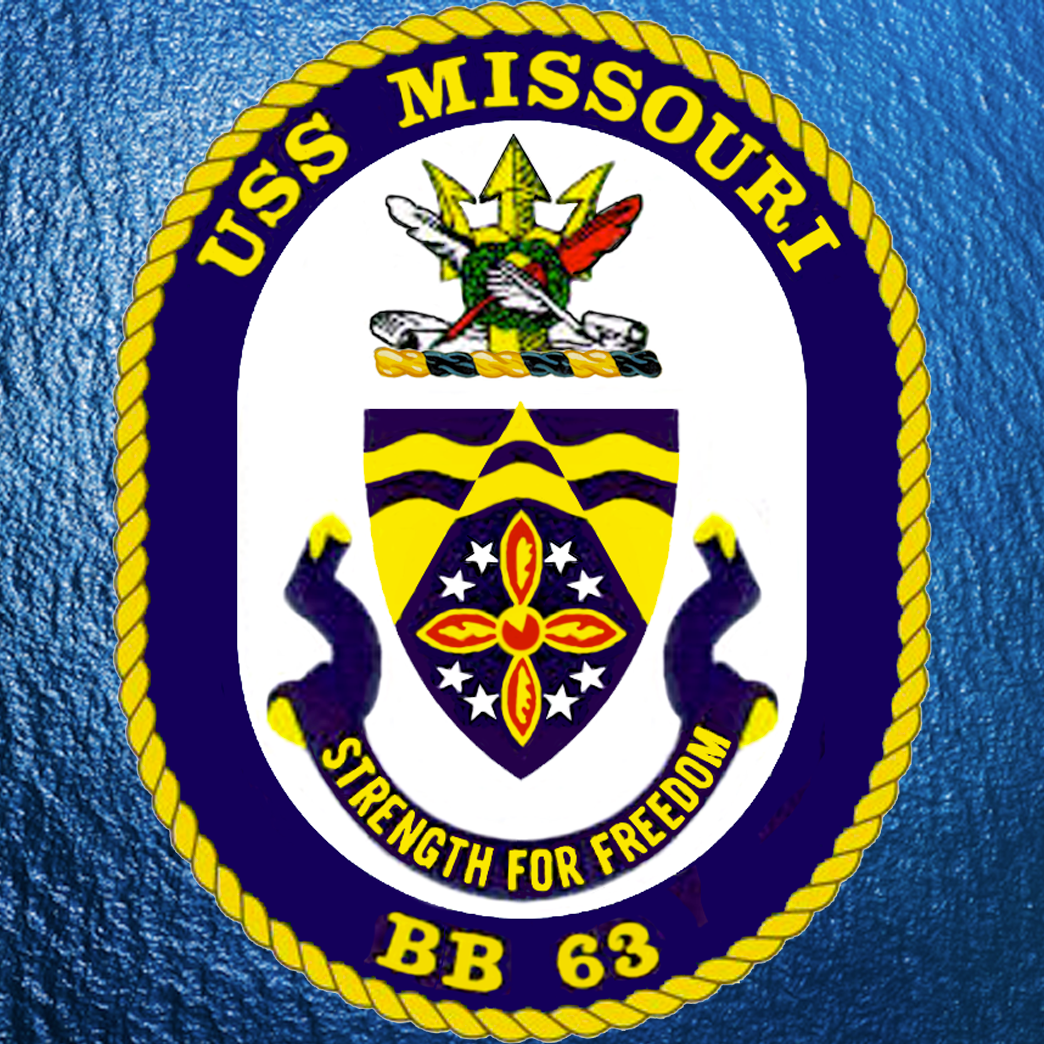

US Navy Ship Wood
Blanks are 3/4" x 3/4"
Wooden Wave Blanks are pre-tubed blanks with a label cast of the ship's seal and wood from the ship. These blanks are designed to work with Sierra Clone or Bolt Action pen kits. Sierra Clone tubes are 2-1/4" x 27/64" and Bolt Action Tubes are 1-31/32”.
All blanks are cut as they are ordered.
------------------------------------------------------------
USS Missouri (BB-63) ("Mighty Mo" or "Big Mo") is an Iowa-class battleship and was the third ship of the United States Navy to be named after the U.S. state of Missouri. Missouri was the last battleship commissioned by the United States and is best remembered as the site of the surrender of the Empire of Japan, which ended World War II.
Missouri was ordered in 1940 and commissioned in June 1944. In the Pacific Theater of World War II she fought in the battles of Iwo Jima and Okinawa and shelled the Japanese home islands, and she fought in the Korean War from 1950 to 1953. She was decommissioned in 1955 into the United States Navy reserve fleets (the "Mothball Fleet"), but reactivated and modernized in 1984 as part of the 600-ship Navy plan, and provided fire support during Operation Desert Storm in January/February 1991.
Missouri received a total of 11 battle stars for service in World War II, Korea, and the Persian Gulf, and was finally decommissioned on 31 March 1992 after serving a total of 17 years of active service, but remained on the Naval Vessel Register until her name was struck in January 1995. In 1998, she was donated to the USS Missouri Memorial Association and became a museum ship at Pearl Harbor.
| Namesake: | State of Missouri |
| Ordered: | 12 June 1940 |
| Builder: | Brooklyn Navy Yard |
| Laid down: | 6 January 1941 |
| Launched: | 29 January 1944 |
| Sponsored by: | Mary Margaret Truman |
| Commissioned: | 11 June 1944 |
| Decommissioned: | 26 February 1955 |
| Recommissioned: | 10 May 1986 |
| Decommissioned: | 31 March 1992 |
| Struck: | 12 January 1995 |
| Identification: | Hull symbol: BB-63 |
| Motto: | "Strength for Freedom" |
| Nickname(s): | "Mighty Mo" or "Big Mo" |
| Honors and awards: |
11 battle stars |
| Status: | Museum ship in Pearl Harbor |
| Notes: | Final battleship to be completed by the United States |


|
Jr Set (12.5mm Embedded Cap & Wood Post) |
|
These blank sets have a cap\upper tube is a custom label cast image of the USS Constitution. The diamond shape contains an embedded swatch of cloth salvaged from the sail of the Constitution during the 1927 renovation. The lower\post section of the set is a short blank of white oak wood salvaged from the Constitution during one of its many renovations. |
|
Sierra Clone (27/64") Embedded |
|
These single blank tubes are a custom label cast image of the USS Constitution. The diamond shape contains an embedded swatch of cloth salvaged from the sail of the Constitution during the 1927 renovation. The ends of the blank sections are a short piece of white oak wood salvaged from the Constitution during one of its many renovations. The grey sections on the edges of the images for these three blanks is covered by the wood. |
|
The Extra COA for Wood Blanks is for purchase with the an all wood blank. |
For Custom Single or Double Tube purchases, please indicate in the checkout notes block what pen kit you need the tubes to fit. All Embedded blanks will ship after May 1st.
USS Constitution, also known as Old Ironsides, three-masted heavy frigate of the United States Navy and the third of the six original frigates authorized for construction by the Naval Act of 1794. She is the world's oldest commissioned naval vessel still afloat. Constitution is most noted for her actions during the War of 1812 against the United Kingdom, when she captured numerous merchant ships and defeated five British warships: HMS Guerriere, Java, Pictou, Cyane, and Levant. The battle with Guerriere earned her the nickname "Old Ironsides" and public adoration that has repeatedly saved her from scrapping.
Today, Constitution's stated mission today is to promote understanding of the Navy's role in war and peace through educational outreach, historical demonstration, and active participation in public events as part of the Naval History & Heritage Command. As a fully commissioned Navy ship, her crew of 60 officers and sailors participate in ceremonies, educational programs, and special events while keeping her open to visitors year-round and providing free tours.
|
USS Constitution |
|||
|
Launched: |
October 21, 1797 |
Class: |
USS United States-Class Frigate |
|
Length: |
175 ft |
Status: |
Active - oldest warship afloat |
|
Beam: |
43 ft 6 in |
Crew: |
450 including 55 Marines and 30 boys (1797) |
|
Draft: |
23 ft 6 in |
||
|
Propulsion: |
Sail |
Armament: |
30 x 24-pounder long gun 20 x 32-pounder carraonade 30 x 24-pounder bow |
|
Speed: |
13 knots |
||


US Navy Ship Wood from the USS Enterprise (CV-6)
Solid wood Blanks are 3/4" x 3/4"
5" x 3/4" Long blanks
2.5" x 3/4" Short blanks
Extra COAs are $2 each
All blanks will come with one COA per blank. COAs are 4" x 6" card stock with foil embossed COA seal.
All blanks are cut as they are ordered.
------------------------------------------------------------
USS Enterprise (CV-6) was a Yorktown-class carrier built for the United States Navy during the 1930s. She was the seventh U.S. Navy vessel of that name. Colloquially called "The Big E", she was the sixth aircraft carrier of the U.S. Navy. Launched in 1936, she was one of only three American carriers commissioned before World War II to survive the war (the others being Saratoga and Ranger). She participated in more major actions of the war against Japan than any other U.S. ship. These actions included the attack on Pearl Harbor, the Battle of Midway, the Battle of the Eastern Solomons, the Battle of the Santa Cruz Islands, the Guadalcanal Campaign, the Battle of the Philippine Sea, and the Battle of Leyte Gulf. Enterprise earned 20 battle stars, more than any other ship, and was the most decorated U.S. ship of World War II. She was also the first U.S. ship to sink a full-sized enemy warship after the Pacific War had been declared when her aircraft sank the Japanese submarine I-70 on 10 December 1941. On three occasions during the war, the Japanese announced that she had been sunk in battle, inspiring her nickname "The Grey Ghost". By the end of the war, her planes and guns had downed 911 enemy planes, sank 71 ships, and damaged or destroyed 192 more. Enterprise was decommissioned February 17, 1947 just after the end of World War II after just shy of nine years of service.


US Navy Ship Wood
Pen Blanks are 3/4" x 3/4"
Call and Stopper blanks are 1-1/2" x 1-1/2"
Wooden Wave Blanks are pre-tubed blanks with a label cast of the ship's seal and wood from the ship. These blanks are designed to work with Sierra Clone or Bolt Action pen kits. Sierra Clone tubes are 2-1/4" x 27/64" and Bolt Action Tubes are 1-31/32”.
All blanks will come with one COA per blank. COAs are 4" x 6" card stock with silver foil embossed COA seal.
All blanks are cut as they are ordered.
------------------------------------------------------------
USS Wisconsin (BB-64) is an Iowa-class battleship, the second ship of the United States Navy to be named in honor of the U.S. state of Wisconsin. She was built at the Philadelphia Naval Shipyard in Philadelphia, Pennsylvania and launched on 7 December 1943 (the second anniversary of the Pearl Harbor raid), sponsored by the wife of Governor Walter Goodland of Wisconsin.
During her career, Wisconsin served in the Pacific Theater of World War II, where she shelled Japanese fortifications and screened United States aircraft carriers as they conducted air raids against enemy positions. During the Korean War, Wisconsin shelled North Korean targets in support of United Nations and South Korean ground operations, after which she was decommissioned. She was reactivated on 1 August 1986; after a modernization program, she participated in Operation Desert Storm in January and February 1991.
Wisconsin was last decommissioned in September 1991 after a total of 14 years of active service in the fleet, and having earned a total of six battle stars for service in World War II and Korea, as well as a Navy Unit Commendation for service during the January/February 1991 Gulf War. She currently functions as a museum ship operated by Nauticus, The National Maritime Center in Norfolk, Virginia. Wisconsin was stricken from the Naval Vessel Register (NVR) 17 March 2006, and was donated for permanent use as a museum ship. On 15 April 2010, the City of Norfolk officially took over ownership of the ship.
| Namesake: | The State of Wisconsin |
| Ordered: | 12 June 1940 |
| Builder: | Philadelphia Naval Shipyard |
| Laid down: | 25 January 1941 |
| Launched: | 7 December 1943 |
| Sponsored by: | Mrs. Goodland wife of Walter S. Goodland |
| Commissioned: | 16 April 1944 |
| Decommissioned: | 1 July 1948 |
| Recommissioned: | 3 March 1951 |
| Decommissioned: | 8 March 1958 |
| Recommissioned: | 22 October 1988 |
| Decommissioned: | 30 September 1991 |
| Struck: | 17 March 2006 |
| Motto: | Forward for Freedom |
| Nickname(s): | "Wisky" or "WisKy" |
| Honors and awards: |
6 Battle Stars |
| Status: | Museum ship at Nauticus |
| Notes: | Homeport Norfolk Virginia |


US Navy Ship Wood
Blanks are 3/4" x 3/4"
Wooden Wave Blanks are pre-tubed blanks with a label cast of the ship's seal and wood from the ship. These blanks are designed to work with Sierra Clone or Bolt Action pen kits. Sierra Clone tubes are 2-1/4" x 27/64" and Bolt Action Tubes are 1-31/32”.
All blanks are cut as they are ordered.
------------------------------------------------------------
USS Iowa (BB-61) is a retired battleship, the lead ship of its class, and the fourth in the United States Navy to be named after the state of Iowa. Owing to the cancellation of the Montana-class battleships, Iowa is the last lead ship of any class of United States battleships and was the only ship of its class to have served in the Atlantic Ocean during World War II.
During World War II, it carried President Franklin D. Roosevelt across the Atlantic to Mers El Kébir, Algeria, en route to a meeting of vital importance in 1943 in Tehran with Prime Minister Winston Churchill of Britain and Joseph Stalin, leader of the Soviet Union. When transferred to the Pacific Fleet in 1944, Iowa shelled beachheads at Kwajalein and Eniwetok in advance of Allied amphibious landings and screened aircraft carriers operating in the Marshall Islands. It also served as the Third Fleet flagship, flying Admiral William F. Halsey's flag at the Japanese surrender in Tokyo Bay. During the Korean War, Iowa was involved in raids on the North Korean coast, after which it was decommissioned into the United States Navy reserve fleets, better known as the "mothball fleet." It was reactivated in 1984 as part of the 600-ship Navy plan and operated in both the Atlantic and Pacific Fleets to counter the recently expanded Soviet Navy. In April 1989, an explosion of undetermined origin wrecked its No. 2 gun turret, killing 47 sailors.
Iowa was decommissioned for the last time in October 1990 after 19 total years of active service, and was initially stricken from the Naval Vessel Register (NVR) in 1995, before being reinstated from 1999 to 2006 to comply with federal laws that required retention and maintenance of two Iowa-class battleships. In 2011 Iowa was donated to the Los Angeles-based non-profit Pacific Battleship Center and was permanently moved to Berth 87 at the Port of Los Angeles in 2012, where it was opened to the public as the USS Iowa Museum.
| Namesake: | State of Iowa |
| Ordered: | 1 July 1939 |
| Builder: | New York Naval Yard |
| Laid down: | 27 June 1940 |
| Launched: | 27 August 1942 |
| Sponsored by: | Ilo Wallace |
| Commissioned: | 22 February 1943 |
| Decommissioned: | 24 March 1949 |
| Recommissioned: | 25 August 1951 |
| Decommissioned: | 24 February 1958 |
| Recommissioned: | 28 April 1984 |
| Decommissioned: | 26 October 1990 |
| Struck: | 17 March 2006 |
| Homeport: | Norfolk, Virginia (after 1980s refit) |
| Identification: | Hull symbol: BB-61 |
| Motto: | "Our Liberties We Prize, Our Rights We Will Maintain" |
| Nickname(s): |
|
| Honors and awards: |
11 battle stars |
| Fate: | Museum ship |
| Status: | On display at the Pacific Battleship Center at the Port of Los Angeles |


Oak Tree Wood from the iconic movie set of the 'Shawshank Redemption' movie
All blanks will come with one COA per blank. COAs are 4" x 6" card stock with silver foil embossed COA seal encased in a protective plastic sleeve.
Blank Tube Size Descriptions:
- Pen Blanks are 1" sq
- Knife Scale Pair are 6" x 1-1/2" x 3/8"
- Ring Blanks are 1-1/2" sq x 3/8"
The Shawshank tree was a white oak located near Malabar Farm State Park in Monroe Township, Richland County, OH. This tree was featured in the 1994 motion picture The Shawshank Redemption. The tree was at least 100 feet tall and approximately 180 to 200 years old. It played a central role in the film's plot and was one of the most popular tourist sites connected to it.
Although located on private property at Malabar Farm, the tree was a major tourist attraction for fans of the film. The tree formed part of "The Shawshank Trail" which features many of the film's iconic locations and attracts up to 35,000 visitors annually. The farm where the tree was located is sometimes used as a venue for weddings.
On July 29, 2011, half of the tree fell due to trunk rot from ants after being hit by lightning. The tree was further damaged in July 2016 due to strong winds. The remaining portions of the tree were cut down on April 9, 2017, by the property's owner, Dan Dees. The Shawshank Tree has been described as among the most iconic trees in film history. The remains of the tree have been turned into pop culture merchandise such as pens, knives, and hammers.
The material for this item was sourced from Dan Dees, the owner of the Shawshank Tree. The material is distributed and certified by Hardin Penworks, LLC.


US Navy Ship Wood
Blanks are 3/4" x 3/4"
5â" x 3/4" Long blanks are $20 each
2.5â" x 3/4" Short blanks are $11 each
5â" x 1-1/2â" Call blanks are $80 each
2.5â" x 1-1/2â" Stopper blanks are $40 each
Extra COAs are $3 each
Wooden Wave Blanks are pre-tubed blanks with a label cast of the ship's seal and wood from the ship. These blanks are designed to work with Sierra Clone or Bolt Action pen kits. Sierra Clone tubes are 2-1/4" x 27/64" and Bolt Action Tubes are 1-31/32”.
All blanks will come with one COA per blank. COAs are 4" x 6" card stock with foil embossed COA seal.
All blanks are cut as they are ordered.
--
USS New Jersey (BB-62) ("Big J" or "Black Dragon") is an Iowa-class battleship, and was the second ship of the United States Navy to be named after the US state of New Jersey. New Jersey earned more battle stars for combat actions than the other four completed Iowa-class battleships, and was the only US battleship providing gunfire support during the Vietnam War.
During World War II, New Jersey shelled targets on Guam and Okinawa, and screened aircraft carriers conducting raids in the Marshall Islands. During the Korean War, she was involved in raids up and down the North Korean coast, after which she was decommissioned into the United States Navy reserve fleets, better known as the "mothball fleet". She was briefly reactivated in 1968 and sent to Vietnam to support US troops before returning to the mothball fleet in 1969. Reactivated once more in the 1980s as part of the 600-ship Navy program, New Jersey was modernized to carry missiles and recommissioned for service. In 1983, she participated in US operations during the Lebanese Civil War.
New Jersey was decommissioned for the last time in 1991 (after serving a total of 21 years in the active fleet), having earned a Navy Unit Commendation for service in Vietnam and 19 battle and campaign stars for combat operations during World War II, the Korean War, the Vietnam War, the Lebanese Civil War, and service in the Persian Gulf. After a brief retention in the mothball fleet, she was donated to the Home Port Alliance in Camden, New Jersey, and began her career as a museum ship 15 October 2001.
| Namesake: | State of New Jersey |
| Ordered: | 1 July 1939 |
| Builder: | Philadelphia Naval Shipyard |
| Laid down: | 16 September 1940 |
| Launched: | 7 December 1942 |
| Sponsored by: | Carolyn Edison |
| Commissioned: | 23 May 1943 |
| Decommissioned: | 30 June 1948 |
| Recommissioned: | 21 November 1950 |
| Decommissioned: | 21 August 1957 |
| Recommissioned: | 6 April 1968 |
| Decommissioned: | 17 December 1969 |
| Recommissioned: | 28 December 1982 |
| Decommissioned: | 8 February 1991 |
| Struck: | 4 January 1999 |
| Motto: | "Firepower for Freedom" |
| Nickname(s): | "Big J" "Black Dragon" |
| Honors and awards: |
19 battle stars |
| Status: | Museum ship in Camden, New Jersey |
| Notes: | Most decorated battleship in the US Navy's history |

These wood blanks are from a genuine M1 Garand rifle stocks.
Wood Garand Stock blanks:
- These blanks are sold in 5", 2.5", and 2" lengths, knife scales and ring blanks.
- These blanks WILL likely have screw holes or inclusions from the gunstock.
- These blanks are mostly square with some round edges.
- All blanks will come with one COA per blank.
- COAs are 4" x 6" card stock with foil embossed COA seal.
- COAs are limited to only ONE per solid wood blank or knife scale pair.
- There are NO extra COAs available for purchase for solid wood blanks.
- Extra COAs available with purchase of HYBRID blanks ONLY
The M1 Garand or M1 rifle is a semi-automatic rifle that was the service rifle of the U.S Army during World War II and the Korean War. The rifle is chambered for the .30-06 Springfield cartridge and is named after its Canadian-American designer, John Garand. It was the first standard-issue autoloading rifle for the United States. By most accounts, the M1 rifle performed well. General George S. Patton called it "the greatest battle implement ever devised". The M1 replaced the bolt-action M1903 Springfield as the U.S.' service rifle in 1936 and was itself replaced by the selective-fire M14 rifle on March 26, 1958.
Approximately 5.4 million M1 Garand was made during World War II. They were used by every branch of the United States military. The rifle generally performed well. General George S. Patton called it "the greatest battle implement ever devised." The typical opponent of a US soldier during World War II was usually armed with a slower-firing bolt-action rifle such as the Karabiner 98k for Germany and the Arisaka rifle for Japan. The impact of faster-firing infantry small arms in general soon stimulated both Allied and Axis forces to greatly increase their issue of semi- and fully automatic firearms then in production, as well as to develop new types of infantry firearms.
Some Garands were still being used by the United States into the Vietnam War in 1963; despite the M14's official adoption in 1958, it was not until 1965 that the changeover from the M1 Garand was fully completed in the active-duty component of the Army. The Garand remained in service with the Army Reserve, Army National Guard, and the Navy into the early 1970s. The South Korean Army was using M1 Garands in the Vietnam War as late as 1966.
Hardin Penworks, LLC, certifies that material supplied to the artisan of the accompanying hand-crafted item was sourced from a genuine M1 Garand rifle stock.
This material is guaranteed to be 100% Authentic.
Feel free to message us for any questions.
facebook.com/StadiumPenBlanks/
Michael@StadiumPenBlanks.com


US Navy Ship Wood
Blanks are 3/4" x 3/4"
Wooden Wave Blanks are pre-tubed blanks with a label cast of the ship's seal and wood from the ship. These blanks are designed to work with Sierra Clone or Bolt Action pen kits. Sierra Clone tubes are 2-1/4" x 27/64" and Bolt Action Tubes are 1-31/32”.
All blanks will come with one COA per blank. COAs are 4" x 6" card stock with silver foil embossed COA seal.
All blanks are cut as they are ordered.
------------------------------------------------------------
USS North Carolina (BB-55) is the lead ship of the North Carolina class of fast battleships, the first vessel of the type built for the United States Navy. Built under the Washington Treaty system, North Carolina's design was limited in displacement and armament, though the United States used a clause in the Second London Naval Treaty to increase the main battery from the original armament of nine 14-inch (360 mm) guns to nine 16 in (410 mm) guns. The ship was laid down in 1937 and completed in April 1941, while the United States was still neutral during World War II. During this period, she operated off the eastern coast of the United States.
Following the Japanese attack on Pearl Harbor in December, North Carolina mobilized for war and was initially sent to Iceland to counter a possible sortie by the German battleship Tirpitz, though this did not materialize and North Carolina was promptly transferred to the Pacific to strengthen Allied forces during the Guadalcanal campaign. There, she screened aircraft carriers engaged in the campaign and took part in the Battle of the Eastern Solomons on 24-25 August, where she shot down several Japanese aircraft. The next month, she was torpedoed by a Japanese submarine but was not seriously damaged. After repairs, she returned to the campaign and continued to screen carriers during the campaigns across the central Pacific in 1943 and 1944, including the Gilberts and Marshall Islands and the Mariana and Palau Islands, where she saw action during the Battle of the Philippine Sea.
The ship was undergoing a refit during the invasion of the Philippines but took part in the later stages of the Philippines campaign and was present when the fleet was damaged by Typhoon Cobra. She took part in offensive operations in support of the Battles of Iwo Jima and Okinawa in 1945, including numerous attacks on Japan. Following the surrender of Japan in August, she carried American personnel home during Operation Magic Carpet. North Carolina operated briefly off the east coast of the United States in 1946 before being decommissioned the next year and placed in reserve. Stricken from the Naval Vessel Register in 1960, the ship was saved from the breaker's yard by a campaign to preserve the vessel as a museum ship in her namesake state. In 1962, the North Carolina museum was opened in Wilmington, North Carolina.
| History | |
|---|---|
|
|
|
| Name: | North Carolina |
| Namesake: | State of North Carolina |
| Ordered: | 1 August 1937 |
| Builder: | New York Naval Shipyard |
| Laid down: | 27 October 1937 |
| Launched: | 13 June 1940 |
| Commissioned: | 9 April 1941 |
| Decommissioned: | 27 June 1947 |
| Struck: | 1 June 1960 |
| Nickname(s): | "Showboat" |
| Status: | Museum ship since 29 April 1962 in Wilmington, North Carolina |
| General characteristics | |
| Class and type: | North Carolina-class battleship |
| Displacement: |
|
| Length: | 728 ft 9 in (222.12 m) |
| Beam: | 108 ft 4 in (33.02 m) |
| Draft: | 32 ft 11.5 in (10.046 m) |
| Installed power: |
|
| Propulsion: |
|
| Speed: | 28 knots (52 km/h; 32 mph) |
| Range: | 17,450 nmi (32,320 km; 20,080 mi) at 15 knots (28 km/h; 17 mph) |
| Complement: | 1,800 |
| Armament: |
|
| Armor: |
|
| Aircraft carried: | 3 × Vought OS2U Kingfisher floatplanes |
| Aviation facilities: | 2 × trainable catapults on her fantail |

US Navy Ship Wood
Blanks are 3/4" x 3/4"
Wooden Wave Blanks are pre-tubed blanks with a label cast of the ship's seal and wood from the ship. These blanks are designed to work with Sierra Clone or Bolt Action pen kits. Sierra Clone tubes are 2-1/4" x 27/64" and Bolt Action Tubes are 1-31/32”.
All blanks are cut as they are ordered.
------------------------------------------------------------


US Navy Ship Wood from the USS Forrestal (CV-59)
5" long wood blanks
27/64" blanks are for Sierra Clones
3/8" blanks are for Bolt Action Pens
These two blanks are label cast images of USS Forrestal with bands of wood from the ship on the ends of the blank.
12.5mm & 10.5mm blanks are for JR series pen kits
JR Set blanks are label cast images of USS Forrestal with bands of wood from the ship on the ends of the blanks for the Cap and Post blanks. The Jr Post blank also has coper wire from the ship embedded in the blank.
All blanks will come with one COA per blank or blank set. COAs are 4" x 6" card stock with gold foil embossed COA seal.
All blanks are cut as they are ordered.
USS Forrestal (CV-59) (later CVA-59, then AVT-59), was a supercarrier named after the first Secretary of Defense James Forrestal. Commissioned in 1955, she was the first completed supercarrier, and was the lead ship of her class. Unlike the successor Nimitz class, Forrestal and her class were conventionally powered. The other carriers of her class were USS Saratoga, USS Ranger and USS Independence. She surpassed the World War II Japanese carrier Shinano as the largest carrier yet built, and was the first designed to support jet aircraft.
The ship was affectionately called "The FID", because her namesake was the first Secretary of Defense, FID standing for "First In Defense". This is also the slogan on the ship's insignia and patch. She was also informally known in the fleet as the "USS Zippo" and "Forest Fire" or "Firestal" because of a number of highly publicized fires on board, most notably a 1967 fire in which 134 sailors died and 161 more were injured.
Forrestal served for nearly four decades in the Atlantic, Mediterranean, and Pacific. She was decommissioned in 1993, and made available as a museum. Attempts to save her were unsuccessful, and in February 2014 she was towed to Brownsville, Texas, to be scrapped. Scrapping was completed in December 2015.
| Name: | USS Forrestal |
| Namesake: | James Forrestal, first United States Secretary of Defense |
| Ordered: | 12 July 1951 |
| Builder: | Newport News Shipbuilding |
| Cost: | US$217 million |
| Laid down: | 14 July 1952 |
| Launched: | 11 December 1954 |
| Acquired: | 29 September 1955 |
| Commissioned: | 1 October 1955 |
| Decommissioned: | 11 September 1993 |
| Reclassified: | CVA to CV-59 on 30 June 1975 |
| Struck: | 11 September 1993 |
| Identification: |
|
| Motto: | First in Defense |
| Nickname(s): |
|
| Fate: | Scrapped in 2015 |
| Class and type: | Forrestal-class aircraft carrier |
| Displacement: |
|
| Length: |
|
| Beam: |
|
| Draft: | 37 ft (11 m) |
| Propulsion: |
|
| Speed: | 33 knots (61 km/h; 38 mph) |
| Complement: | 552 officers, 4,988 enlisted |
| Armament: |
|
| Aircraft carried: | approx. 85 aircraft (F-14, F-4, A-4, A-7, A-6, E-2, S-3B, EA-6B, C-2, SH-3, A-3B, KC-130 (test flight)) |

These wood blanks are from a genuine M1903 Springfield rifle stock.
Wood Springfield Stock blanks:
- These blanks are sold in 5", 2.5", and 2" lengths.
- These blanks WILL likely have screw holes or inclusions from the gunstock.
- These blanks are mostly square with some round edges.
- All blanks will come with one COA per blank.
- COAs are 4" x 6" card stock with foil embossed COA seal.
- COAs are limited to only ONE per solid wood blank.
- There are NO extra COAs available for purchase for solid wood blanks.
- Extra COAs available with purchase of HYBRID blanks ONLY
The M1903 Springfield, officially the United States Rifle, Caliber .30-06, Model 1903, is an American five-round magazine-fed, bolt-action service repeating rifle, used primarily during the first half of the 20th century.
The M1903 was first used in combat during the Philippine–American War, and it was officially adopted by the United States as the standard infantry rifle on June 19, 1903, where it saw service in World War I, and was replaced by the faster-firing semi-automatic eight-round M1 Garand starting in 1936. However, the M1903 remained in service as a standard issue infantry rifle during World War II, since the U.S. entered the war without sufficient M1 rifles to arm all troops. It also remained in service as a sniper rifle during World War II, Korean War, and Vietnam War. It remains popular as a civilian firearm, historical collector's piece, a competitive shooting rifle, and as a military drill rifle.
During the 1898 war with Spain, the Mauser M1893 used by the Spanish Army gained a deadly reputation, particularly from the Battle of San Juan Hill, where 750 Spanish regulars significantly delayed the advance of 15,000 US troops armed with outclassed Springfield Krag–Jørgensen bolt-action rifles and older single-shot Springfield trapdoor rifles. The 1903 adoption of the M1903 was preceded by nearly 30 years of struggle and politics, using lessons learned from the recently adopted Krag–Jørgensen and contemporary German Mauser Gewehr 98 bolt-action rifles. The design itself is largely based on the Mauser M1893 and its successive models up to the Gewehr 98 rif
Hardin Penworks, LLC, certifies that material supplied to the artisan of the accompanying hand-crafted item was sourced from a genuine M1 Garand rifle stock.
This material is guaranteed to be 100% Authentic.
Feel free to message us for any questions.
facebook.com/StadiumPenBlanks/
Michael@StadiumPenBlanks.com

Wood bowling alley flooring from the Jefferson Ice Company's single lane bowling alley - Al Capone’s Weekend Retreat.
All blanks will come with one COA per blank. COAs are 4" x 6" card stock with silver foil embossed COA seal.
Blank Tube Size Descriptions:
- Pen Blanks are 3/4" sq
The Great Chicago Fire was a conflagration that burned in the American city of Chicago during October 8–10, 1871. The fire killed approximately 300 people, destroyed roughly 3.3 square miles of the city including over 17,000 structures, and left more than 100,000 residents homeless. The fire began in a neighborhood southwest of the city center. A long period of hot, dry, windy conditions, and the wooden construction prevalent in the city, led to the conflagration. The fire leapt the south branch of the Chicago River and destroyed much of central Chicago and then leapt the main branch of the river, consuming the Near North Side.
The fire is claimed to have started at about 8:30 p.m. on October 8, in or around a small barn belonging to the O'Leary family that bordered the alley behind 137 W. DeKoven Street. The shed next to the barn was the first building to be consumed by the fire. City officials never determined the cause of the blaze, but the rapid spread of the fire due to a long drought in that year's summer, strong winds from the southwest, and the rapid destruction of the water pumping system, explain the extensive damage of the mainly wooden city structures.
The wood sourced for this item was removed by Hans Wilkins during a November 2013 renovation of the third floor, top floor, of the Coach House off alley in the teens block of East Division Chicago, IL. This structure was the only one on the block to survive the Great Chicago Fire. The wood is distributed and certified by Hardin Penworks, LLC.


US Navy Ship Wood
Blanks are 3/4" x 3/4"
Wooden Wave Blanks are pre-tubed blanks with a label cast of the ship's seal and wood from the ship. These blanks are designed to work with Sierra Clone or Bolt Action pen kits. Sierra Clone tubes are 2-1/4" x 27/64" and Bolt Action Tubes are 1-31/32”.
All blanks are cut as they are ordered.
------------------------------------------------------------
USS Alabama (BB-60) is a retired battleship. She was the fourth and final member of the South Dakota class of fast battleships built for the United States Navy in the 1940s.
After entering service in 1942, the Alabama was deployed to protect convoys in the Atlantic Ocean. In 1943, she was transferred to the Pacific for operations against Japan, helping with the Gilbert and Marshall Islands campaign that began in November 1943. While operating in the Pacific, she served primarily as an escort for the fast carrier task force to protect the aircraft carriers from surface and air attacks. She also frequently bombarded Japanese positions in support of amphibious assaults. She took part in the Mariana and Palau Islands campaign from June–September and the Philippines campaign from October–December. After a refit in early 1945, she returned to the fleet for operations during the Battle of Okinawa and the series of attacks on the Japanese mainland in July and August, including several bombardments of coastal industrial targets.
The Alabama assisted in Operation Magic Carpet after the war, carrying some 700 men home from the former war zone. She was decommissioned in 1947 and assigned to the Pacific Reserve Fleet, where she remained until stricken from the Naval Vessel Register in 1962.
The USS Alabama was preserved as a memorial museum ship in Mobile Bay, AL.

US Navy Ship Wood from the USS Lexington (CV-16)
Embedded wood blanks from the USS Lexington CV-16 are label cast images of the ship out to see with wood slices on the ends of the blanks. These blanks are available in Bolt Action and Sierra Clone blanks. Custom blanks are also available but will take up to two weeks for delivery.
All blanks will come with one COA per blank. COAs are 4" x 6" card stock with foil embossed COA seal.
All blanks are cut as they are ordered.
USS Lexington (CV/CVA/CVS/CVT/AVT-16), nicknamed "The Blue Ghost", is an Essex-class aircraft carrier built during World War II for the United States Navy. Originally intended to be named Cabot, the new aircraft carrier was renamed while under construction to commemorate the recently-lost USS Lexington (CV-2), becoming the sixth U.S. Navy ship to bear the name in honor of the Battle of Lexington.
Since 1992, the ship has been docked in Corpus Christi, Texas, where she operates as a museum.
![Citizens Bank Park (Philadelphia Phillies) [Wood]](http://stadiumpenblanks.com/cdn/shop/products/CitizensBankPark_PhiladelphiaPhillies_wood.png?v=1666626524&width=1500)
![Image of certificate of authenticity for Citizens Bank Park (Philadelphia Phillies) [Wood] - front](http://stadiumpenblanks.com/cdn/shop/files/citizens-bank-park-philadelphia-phillies-wood_front.png?v=1783380460&width=1500)
These blanks are made from the wooden barstools and club seats of Citizens Bank Park, home of the Philadelphia Phillies.
Wooden Club Seat Pen Blanks!
Pen Blanks are 3/4" x 3/4"
Stopper Blanks are 1 1/2" round
All blanks will come with one COA per blank. COAs are 4" x 6" card stock with silver foil embossed COA seal.
All blanks are cut as they are ordered.
------------------------------------------------------------
With a seating capacity of 42,792, the ballpark is located on the northeast corner of the Sports Complex within the city's South Philadelphia Sports Complex of Philadelphia, PA. Citizens Bank Park is the home of the MLB Philadelphia Phillies. It opened April 3, 2004 and hosted its first regular-season baseball game on April 12, 2004. The ballpark was built to replace the 33-year-old, now-demolished Veterans Stadium.
This material is guaranteed to be 100% Authentic.

US Navy Ship Wood
Embedded object Blanks
27/64" blanks are for Sierra Clones
All blanks will come with one COA per blank. COAs are 4" x 6" card stock with silver foil embossed COA seal.
All blanks are cut as they are ordered.
------------------------------------------------------------
The USS Des Moines (CA-134), the second ship of that name in the United States Navy, was the lead ship of a class of heavy cruisers. She was the first ship in the United States Navy to feature the auto loading Mark 16 8-inch/55 caliber gun, which was the first of its type in the world.
| History | |
|---|---|
|
|
|
| Name: | Des Moines |
| Namesake: | Des Moines, Iowa |
| Ordered: | 25 September 1943 |
| Builder: | Bethlehem Steel Company |
| Laid down: | 28 May 1945 |
| Launched: | 27 September 1946 |
| Commissioned: | 16 November 1948 |
| Decommissioned: | 6 July 1961 |
| Struck: | 9 July 1991 |
| Identification: | Hull symbol: CA-134 |
| Fate: | Scrapping completed by ESCO Marine, Inc., Brownsville, TX on 16 August 2007. |
| General characteristics | |
| Class and type: | Des Moines-class heavy cruiser |
| Displacement: | 17,000 tons |
| Length: | 716 ft 6 in (218.39 m) |
| Beam: | 76 ft 6 in (23.32 m) |
| Draft: | 22 ft (6.7 m) |
| Propulsion: | 4 shaft; General Electric turbines; 4 boiler; 120,000 shp (89,000 kW) |
| Speed: | 33 knots (38 mph; 61 km/h) |
| Range: | 10,500 nmi (19,450 km) at 15 knots (17 mph; 28 km/h) |
| Complement: | 1,799 officers and enlisted |
| Armament: |
|


Wood blanks from Naval Station Great Lakes Building 1.
All blanks will come with one COA per blank. COAs are 4" x 6" card stock with silver foil embossed COA seal.
Blank Tube Size Descriptions:
- Pen Blanks are 7/8" sq minimum
The largest single training facility for the U.S. Navy is a thousand miles from the nearest ocean. Great Lakes Naval Training Station, located in North Chicago, IL, formally opened in 1911 on land donated by the Merchants Club of Chicago. It was a product of the expansive nationalism of the era following the Spanish-American War, as well as aggressive self-promotion by Chicago businessmen and Illinois politicians. Ideally located at the nation's rail hub and near its population center, the camp gained great significance during World War I, but reached its nadir when it was closed to new trainees between 1933 and 1935. Within a month after Pearl Harbor, the navy announced that a $33-million expansion would increase its recruit capacity from 10,000 to 45,000; by the end of 1942, 75,000 were on base. During World War II, Great Lakes supplied about a million men, over a third of all personnel who served in the U.S. Navy.
Naval Station Great Lakes (NAVSTA Great Lakes) is the home of the United States Navy's only current boot camp. Important tenant commands include the Recruit Training Command, Training Support Center, and Navy Recruiting District Chicago. Naval Station Great Lakes is the largest military installation in Illinois and the largest training station in the Navy. The base has 1,153 buildings situated on 1,628 acres and has 69 mi of roadway to provide access to the base's facilities. Within the naval service, it has several different nicknames, including "The Quarterdeck of the Navy", or the more derogatory "Great Mistakes".
One of the landmarks of Naval Station Great Lakes is Building 1, also known as the clocktower building. Completed in 1911, the building is made of red brick, and has a tower standing over the third floor of the building. Building one, with offices for the base commander and staff, was originally known as the Administration Building. Designed as the focal point of the base, its 155-foot tower overlooks the parade field and was the tallest structure on the original Training Station. The large parade ground in front of the building is named Ross Field.

Wood flooring from the Mineola Hotel - Al Capone’s Weekend Retreat.
All blanks will come with one COA per blank. COAs are 4" x 6" card stock with silver foil embossed COA seal.
Blank Tube Size Descriptions:
- Pen Blanks are 3/4" sq
The Mineola Hotel, nestled in Fox Lake, Illinois, holds a rich history dating back to the late 19th century. Originally established in 1884 by the Milwaukee Railroad, it was primarily built to serve as a resort destination for city dwellers seeking relaxation and leisure activities amidst the picturesque landscape of the Chain O'Lakes region.
Throughout its existence, the Mineola Hotel has undergone several transformations, adapting to the changing times and evolving tastes of its patrons. At its zenith, during the early to mid-20th century, it was known for its luxurious amenities, elegant accommodations, fine dining restaurants, and vibrant entertainment options.
However, like many historic establishments, the Mineola Hotel has experienced periods of decline and resurgence. Despite facing challenges such as economic downturns and changing travel trends, it has retained its charm and allure, attracting visitors with its nostalgic ambiance and scenic surroundings.
Adding to its mystique is the association with Al Capone, the infamous Chicago mobster. During the Prohibition era of the 1920s, establishments like the Mineola often became hubs for illicit activities, including bootlegging and gambling. Legend has it that Capone and his associates frequented the Mineola Hotel, using it as a hideout and meeting place away from the prying eyes of law enforcement.
While specific details of Capone's activities at the Mineola Hotel may be shrouded in secrecy and embellished by folklore, his connection to the area adds to the hotel's allure and historical significance. Visitors are often drawn to the Mineola not only for its scenic beauty and Victorian charm but also for the opportunity to immerse themselves in the lore of the Prohibition era and the exploits of figures like Al Capone.
Today, the Mineola Hotel stands as a testament to Fox Lake's rich heritage and serves as a reminder of a bygone era of grandeur and hospitality. While its glory days may be behind it, its legacy continues to endure, offering glimpses into the past and providing a tranquil retreat for travelers seeking a taste of history amidst the natural beauty of the Chain O'Lakes region.

Blanks are made from the original deck planks of the Ocean City, MD Boardwalk.
WARNING: these blanks may contain small particles of sand.
Pen Blanks are a minimum of 3/4" x 3/4"
All blanks will come with one COA per blank. COAs are 4" x 6" card stock with foil embossed COA seal.
All blanks are cut as they are ordered.
Ocean City is an Atlantic resort town in Maryland along the East Coast of the United States. The population was 6,844 at the 2020 U.S. census, but during summer weekends the city hosts up to 345,000 vacationers and up to eight million visitors annually. During the summer, Ocean City becomes the second most populated municipality in Maryland, after Baltimore.
The Ocean City Boardwalk currently runs from South 2nd Street at the Ocean City Inlet in South Ocean City, up to 27th Street in South Ocean City. The boardwalk is home to food, shops, arcades, and amusements.
Originally called the "Atlantic Avenue", the first Ocean City boardwalk was constructed in 1902. After being damaged by a storm in 1962, the boardwalk was rebuilt to stretch a total of 2.25 miles, which is still its length today. Many years later the boardwalk would suffer extensive storm damage during Hurricane Gloria in 1985 which pummeled Ocean City with 89 mph winds. The boardwalk was refurbished, and a concrete sea wall was soon constructed following the storm to prevent further damage. The aftermath of Hurricane Gloria led to the first phase of extensive beach replenishment projects in Ocean City.
The Ocean City Boardwalk was damaged again in 2012 as a result of Hurricane Sandy. The boardwalk was flooded and half of it was destroyed as a result of the water coming so far onto shore. The boardwalk has since been rebuilt back to its original length and still attracts many tourists and families.


Explore Our Signature Collections

Abrasive Polishing Compund
Magic Juice
Magic Juice (MJ) is an ideal polishing compound for solid resin materials and plastics. It can also be used to polish finishes like CA (Cyanoacrylate), CC (Craft Coat), or similar products. For hybrid or "worthless" wood blanks, applying a sealing finish such as CA or Craft Coat before polishing with MJ will yield the best results.

Unique and highly collectible artifacts
Aircraft Relics
This collection of pen blanks is a tribute to aviation history, featuring aircraft relics spanning from the Wright Brothers' pioneering flights to the era of World War II and even the Space Shuttles, with many iconic planes in between. The collection includes both civilian and military aircraft, offering a unique connection to aviation's most remarkable achievements.

Revolutionary War to Present Day
Navy Ship Wood
Our solid wood and embedded hybrid blanks are crafted from the historic wood of U.S. Navy ships and submarines. This extraordinary collection spans vessels from the era of the USS Constitution to Iowa-class battleships and Los Angeles-class submarines, along with several other iconic ships in between.

Abrasive Polishing Compund
Player Relics
Our hybrid blanks combine game-used player relics with material from the iconic stadiums where their teams made history. Whether it's baseball, football, basketball, hockey, or even boxing, we offer a vast collection of player relic blanks. Each piece is a one-of-a-kind tribute to legendary athletes and the venues that defined their careers.

Bourbon and Scotch Barrel staves
Wine & Whiskey
Our extensive collection of barrel stave blanks is sourced from renowned wine vineyards, American bourbon barrels, and imported Scotch whisky casks. With staves from these barrels, each blank embodies the rich history and craftsmanship of these iconic spirits. Perfect for collectors and connoisseurs alike.
Recently Products Viewed


Important Legal Notice & Trademark Disclaimer
Stadium Pen Blanks products are intended for lawful personal and custom use only. Customers are solely responsible for ensuring their finished products comply with all applicable trademark laws.
We acknowledge that some pen turners pair our blanks with label-cast materials. However, we do NOT endorse, authorize, or support the application of any trademarked logos, team names, or branding owned by third parties, including professional and collegiate sports leagues and organizations such as MLB®, NFL®, NBA®, NHL®, NCAA®, MLS®, or any private businesses.
"Sierra™" is a registered trademark of Berea Hardwoods Co., Inc.