


![Sports Blanks [Wood]](http://stadiumpenblanks.com/cdn/shop/collections/Stadium-Wood.png?v=1727373383&width=3840)
![Sports Blanks [Plastic]](http://stadiumpenblanks.com/cdn/shop/collections/Plastic.png?v=1727373361&width=3840)
![Sports Blanks [All] - MLB](http://stadiumpenblanks.com/cdn/shop/collections/MLB.png?v=1727372677&width=3840)
![Sports Blanks [All] - NFL](http://stadiumpenblanks.com/cdn/shop/collections/NFL.png?v=1727372610&width=3840)

![Sports Blanks [All] - NBA](http://stadiumpenblanks.com/cdn/shop/collections/nba.png?v=1727372751&width=3840)
![Sports Blanks [All] - NHL](http://stadiumpenblanks.com/cdn/shop/collections/nhl.png?v=1727372784&width=3840)
![Sports Blanks [All] - NASCAR](http://stadiumpenblanks.com/cdn/shop/collections/NASCAR.png?v=1727372736&width=3840)
![Sports Blanks [All] - International Football Clubs](http://stadiumpenblanks.com/cdn/shop/collections/International.png?v=1727383899&width=3840)
![Sports Blanks [All] - MiLB](http://stadiumpenblanks.com/cdn/shop/collections/MiLB.png?v=1727372662&width=3840)
![Sports Blanks [All] - MLS](http://stadiumpenblanks.com/cdn/shop/collections/MLS.png?v=1727372725&width=3840)
![Sports Blanks [All] - Racing](http://stadiumpenblanks.com/cdn/shop/collections/horse.png?v=1727373032&width=3840)


![DinoBone 1 - Mold Body - 5.25" x 7/8" Pen Blanks [[SECONDS]] 40% Off](http://stadiumpenblanks.com/cdn/shop/files/DinoBone1-top-SECOND.png?v=1749599743&width=50)
![DinoBone 2 - Mold Body - 5.25" x 7/8" Pen Blanks [[SECONDS]] 40% Off](http://stadiumpenblanks.com/cdn/shop/files/DinoBone2-top-SECOND.png?v=1749599743&width=50)
![DinoBone 3 - Mold Body - 5.25" x 7/8" Pen Blanks [[SECONDS]] 40% Off](http://stadiumpenblanks.com/cdn/shop/files/DinoBone3-top-SECOND.png?v=1749599743&width=50)
![DogBone 1 - Mold Body - 5.5" x 3/4" Pen Blanks [[SECONDS]] 40% Off](http://stadiumpenblanks.com/cdn/shop/files/DogBone1-top-SECOND.png?v=1749609967&width=50)
![DogBone 2 - Mold Body - 5.5" x 3/4" Pen Blanks [[SECONDS]] 40% Off](http://stadiumpenblanks.com/cdn/shop/files/DogBone2-top-SECOND.png?v=1749609967&width=50)


84 products
Sort by:
84 products
84 products
|
Sierra Clone (27/64") Embedded |
|
These single blank tubes are a custom label cast image of the USS Fulton. The ends of the blank sections are a short piece of wood salvaged from the Fulton.
|
xxxxxxxxxxxx
|
USS Fulton (AS-11) |
|||
|
Laid Down: |
|
Class: |
|
| Launched: |
Displacement: |
||
| Commissioned: |
|
Length: | |
| Decommissioned: |
|
Beam: |
|
|
Striken: |
Draft: | ||
| Crew: | Speed: | ||
|
Propulsion: |
|
Armament: |
|

US Navy Ship Wood
Embedded object Blanks
27/64" blanks are for Sierra Clones
All blanks will come with one COA per blank. COAs are 4" x 6" card stock with silver foil embossed COA seal.
All blanks are cut as they are ordered.
------------------------------------------------------------
USS Hornet (CV/CVA/CVS-12) is an Essex-class aircraft carrier built for the United States Navy (USN) during World War II. Completed in late 1943, the ship was assigned to the Fast Carrier Task Force (variously designated as Task Force 38 or 58) in the Pacific Ocean, the navy's primary offensive force during the Pacific War. In early 1944, she participated in attacks on Japanese installations in New Guinea, Palau and Truk among others. Hornet then took part in the Mariana and Palau Islands campaign and most of the subsidiary operations, most notably the Battle of the Philippine Sea in June that was nicknamed the "Great Marianas Turkey Shoot" for the disproportionate losses inflicted upon the Japanese. The ship then participated in the Philippines Campaign in late 1944, and the Volcano and Ryukyu Islands campaign in the first half of 1945. She was badly damaged by a typhoon in June and had to return to the United States for repairs.
After the war she took part in Operation Magic Carpet, returning troops to the U.S. and was then placed in reserve in 1946. Hornet was reactivated during the Korean War of 1950-1953, but spent the rest of the war being modernized to allow her to operate jet-propelled aircraft. The ship was modernized again in the late 1950s for service as an anti-submarine carrier. She played a minor role in the Vietnam War during the 1960s and in the Apollo program, recovering the Apollo 11 and Apollo 12 astronauts as they returned from the Moon.
Hornet was decommissioned in 1970. She was eventually designated as both a National Historic Landmark and a California Historical Landmark, and she opened to the public as the USS Hornet Museum in Alameda, California, in 1998.
| Name: | Hornet |
| Namesake: | Hornet |
| Ordered: | 20 May 1940 |
| Awarded: | 9 September 1940 |
| Builder: | Newport News Shipbuilding, Newport News, Virginia |
| Laid down: | 3 August 1942 |
| Launched: | 30 August 1943 |
| Commissioned: | 29 November 1943 |
| Decommissioned: | 15 January 1947 |
| Renamed: | From Kearsarge, October 1942 |
| Identification: | Hull number: CV-12 |
| Recommissioned: | 11 September 1953 |
| Decommissioned: | 26 June 1970 |
| Reclassified: |
|
| Struck: | 25 July 1989 |
| Status: | Museum ship at the USS Hornet Museum in Alameda, California |
USS Indiana Pen Blank - Authentic Naval Relic
Turn a piece of living naval history with this pen blank sourced from the USS Indiana. Precision materials deliver a tangible connection to one of America's storied battleships.
Available Sizes & COA
Blanks are cut fresh to order. Each ships with a Certificate of Authenticity documenting provenance.
Material Provenance & Customer Vision
Material originates from the historic vessel. Makers can create heirloom pens that honor naval service. Pair with Pen display stands & COA holders to showcase your finished piece.
USS Indiana Service History
The USS Indiana (BB-58) was an iconic South Dakota-class battleship whose construction began in 1939 and commissioning occurred in 1942. Designed for speed and heavy firepower, she displaced over 35,000 tons and carried nine 16-inch guns capable of engaging targets at extreme range. During World War II she earned 9 battle stars while supporting critical operations in the Pacific theater including the Gilbert Islands, Marshall Islands, and the Battle of the Philippine Sea. Her armor and anti-aircraft batteries protected carrier task forces against relentless attacks. Post-war she served in training roles before decommissioning in 1947. The legacy of her teak decks and steel hull continues to inspire makers seeking authentic military relics. Enthusiasts value these blanks for their direct provenance and the stories they carry from the decks of a vessel that helped shape victory in the Pacific. Additional context on similar naval woods is available via US Navy ship wood and Military relics. Explore compatible turning supplies at Pen blanks and polishing options with Magic Juice Polishing Compound. For kit compatibility review Compatible Pen Component Sets. Discover more aviation and ship relics in Aviation relics and Embedded blanks. This material rewards careful turning and finishing techniques that highlight natural grain and historical character.

US Navy Ship Wood
Embedded object Blanks
27/64" blanks are for Sierra Clones
12.5mm & 10.5mm blanks are for JR series
All blanks will come with one COA per blank. COAs are 4" x 6" card stock with silver foil embossed COA seal.
All blanks are cut as they are ordered.
------------------------------------------------------------
USS Intrepid (CV/CVA/CVS-11), also known as The Fighting "I", is one of 24 Essex-class aircraft carriers built during World War II for the United States Navy. She is the fourth US Navy ship to bear the name. Commissioned in August 1943, Intrepid participated in several campaigns in the Pacific Theater of Operations, most notably the Battle of Leyte Gulf. Decommissioned shortly after the end of the war, she was modernized and recommissioned in the early 1950s as an attack carrier (CVA), and then eventually became an antisubmarine carrier (CVS). In her second career, she served mainly in the Atlantic, but also participated in the Vietnam War. Her notable achievements include being the recovery ship for a Mercury and a Gemini space mission. Because of her prominent role in battle, she was nicknamed "the Fighting I", while her frequent bad luck and time spent in dry dock for repairs—she was torpedoed once and hit by four separate Japanese kamikaze aircraft—earned her the nicknames "Decrepit" and "the Dry I". Decommissioned in 1974, in 1982 Intrepid became the foundation of the Intrepid Sea, Air & Space Museum in New York City.
| History | |
|---|---|
|
|
|
| Name: | Intrepid |
| Builder: | Newport News Shipbuilding |
| Laid down: | 1 December 1941 |
| Launched: | 26 April 1943 |
| Commissioned: | 16 August 1943 |
| Decommissioned: | 15 March 1974 |
| Struck: | 23 February 1982 |
| Nickname(s): | "Fighting I", "Dry I" |
| Status: | Museum ship at the Intrepid Sea, Air & Space Museum in New York City. |
| Badge: | |
| General characteristics | |
| Class and type: | Essex-class aircraft carrier |
| Displacement: |
|
| Length: |
|
| Beam: | 93 ft (28.3 m) (waterline) |
| Draft: | 34 ft 2 in (10.41 m) (full load) |
| Installed power: |
|
| Propulsion: | 4 × shafts; 4 × geared steam turbines |
| Speed: | 33 knots (61 km/h; 38 mph) |
| Range: | 14,100 nmi (26,100 km; 16,200 mi) at 20 knots (37 km/h; 23 mph) |
| Complement: | 2,600 officers and enlisted men |
| Armament: |
|
| Armor: |
|
| Aircraft carried: | 91-103 aircraft |


US Navy Ship Wood
Blanks are 3/4" x 3/4"
Wooden Wave Blanks are pre-tubed blanks with a label cast of the ship's seal and wood from the ship. These blanks are designed to work with Sierra Clone or Bolt Action pen kits. Sierra Clone tubes are 2-1/4" x 27/64" and Bolt Action Tubes are 1-31/32”.
All blanks are cut as they are ordered.
------------------------------------------------------------
USS Iowa (BB-61) is a retired battleship, the lead ship of its class, and the fourth in the United States Navy to be named after the state of Iowa. Owing to the cancellation of the Montana-class battleships, Iowa is the last lead ship of any class of United States battleships and was the only ship of its class to have served in the Atlantic Ocean during World War II.
During World War II, it carried President Franklin D. Roosevelt across the Atlantic to Mers El Kébir, Algeria, en route to a meeting of vital importance in 1943 in Tehran with Prime Minister Winston Churchill of Britain and Joseph Stalin, leader of the Soviet Union. When transferred to the Pacific Fleet in 1944, Iowa shelled beachheads at Kwajalein and Eniwetok in advance of Allied amphibious landings and screened aircraft carriers operating in the Marshall Islands. It also served as the Third Fleet flagship, flying Admiral William F. Halsey's flag at the Japanese surrender in Tokyo Bay. During the Korean War, Iowa was involved in raids on the North Korean coast, after which it was decommissioned into the United States Navy reserve fleets, better known as the "mothball fleet." It was reactivated in 1984 as part of the 600-ship Navy plan and operated in both the Atlantic and Pacific Fleets to counter the recently expanded Soviet Navy. In April 1989, an explosion of undetermined origin wrecked its No. 2 gun turret, killing 47 sailors.
Iowa was decommissioned for the last time in October 1990 after 19 total years of active service, and was initially stricken from the Naval Vessel Register (NVR) in 1995, before being reinstated from 1999 to 2006 to comply with federal laws that required retention and maintenance of two Iowa-class battleships. In 2011 Iowa was donated to the Los Angeles-based non-profit Pacific Battleship Center and was permanently moved to Berth 87 at the Port of Los Angeles in 2012, where it was opened to the public as the USS Iowa Museum.
| Namesake: | State of Iowa |
| Ordered: | 1 July 1939 |
| Builder: | New York Naval Yard |
| Laid down: | 27 June 1940 |
| Launched: | 27 August 1942 |
| Sponsored by: | Ilo Wallace |
| Commissioned: | 22 February 1943 |
| Decommissioned: | 24 March 1949 |
| Recommissioned: | 25 August 1951 |
| Decommissioned: | 24 February 1958 |
| Recommissioned: | 28 April 1984 |
| Decommissioned: | 26 October 1990 |
| Struck: | 17 March 2006 |
| Homeport: | Norfolk, Virginia (after 1980s refit) |
| Identification: | Hull symbol: BB-61 |
| Motto: | "Our Liberties We Prize, Our Rights We Will Maintain" |
| Nickname(s): |
|
| Honors and awards: |
11 battle stars |
| Fate: | Museum ship |
| Status: | On display at the Pacific Battleship Center at the Port of Los Angeles |
USS Iowa (BB-61) Jr. Pen Blank Set
Ship’s Seal Cap + Authentic Teak Deck Wood
Turn a piece of living naval history. This Junior-size pen blank set pairs a precision-cast resin cap featuring the official seal of the USS Iowa (BB-61) with a solid lower blank cut from original teak decking recovered from the lead ship of the Iowa-class battleships.
What’s Included
Cap blank: High-quality resin casting of the USS Iowa ship’s seal
Lower blank: Solid teak from the actual deck of BB-61
Sized for Junior (Jr.) pen kits
Each set includes a Certificate of Authenticity documenting the provenance of the teak.
For guidance on tube sizes and compatible pen kits, see our detailed reference:
Understanding Tube Sizes for Pen Kits at Stadium Pen Blanks
Historical Significance of the USS Iowa (BB-61)
The USS Iowa (BB-61) is the lead ship of the Iowa-class battleships—the last and most powerful class of battleships ever built by the United States. Laid down in June 1940 and commissioned on February 22, 1943, Iowa represented the pinnacle of American battleship design. Fast, heavily armed, and heavily armored, she combined a top speed of over 33 knots with nine 16-inch/50-caliber guns capable of firing 2,700-pound shells more than 20 miles.
During World War II, Iowa served primarily in the Pacific Theater. She screened aircraft carriers, bombarded enemy shore positions, and supported major operations including the Marshall Islands campaign, the Marianas, and the Philippines. In late 1943 she carried President Franklin D. Roosevelt across the Atlantic to the Tehran Conference.
Reactivated for the Korean War in 1951, Iowa provided heavy naval gunfire support along the Korean peninsula. She was decommissioned again in 1958. Nearly three decades later, as part of the Reagan-era naval buildup, Iowa was modernized and recommissioned in 1984. Her 16-inch guns and newly installed Tomahawk and Harpoon missile systems returned her to the fleet as a formidable surface combatant during the final years of the Cold War.
Tragedy struck on April 19, 1989, when an explosion in Turret Two killed 47 crew members during a gunnery exercise. The incident remains one of the darkest days in modern U.S. Navy history. The teak used in these blanks comes from the ship’s original decking, giving each pen a tangible connection to this storied vessel. Turners appreciate the dense, stable grain of the teak paired with the crisp detail of the resin seal cap.
Compatibility & Turning Notes
These blanks are sized specifically for Junior pen kits. The resin cap accepts standard tube sizes; the teak lower blank machines cleanly with carbide tools and accepts a wide range of finishes including CA glue, polyurethane, and friction polish. Always test fit tubes before final assembly.
Project Ideas
Ideal for military-themed pens, retirement gifts, or commemorative pieces for naval veterans and history enthusiasts. Pair with other Historical Materials or Military blanks from our catalog for matching sets.
Care & Safety
Store blanks in a cool, dry place. Wear appropriate PPE when turning and finishing. The Certificate of Authenticity is included with every set.

US Navy Ship Wood from the USS Lake Champlain (CV-39)
Solid wood Blanks are 3/4" x 3/4"
5" x 3/4" Long blanks
2.5" x 3/4" Short blanks
Extra COAs are $3 each
All blanks will come with one COA per blank. COAs are 4" x 6" card stock with foil embossed COA seal.
All blanks are cut as they are ordered.
------------------------------------------------------------

US Navy Ship Wood from the USS Lexington (CV-16)
Embedded wood blanks from the USS Lexington CV-16 are label cast images of the ship out to see with wood slices on the ends of the blanks. These blanks are available in Bolt Action and Sierra Clone blanks. Custom blanks are also available but will take up to two weeks for delivery.
All blanks will come with one COA per blank. COAs are 4" x 6" card stock with foil embossed COA seal.
All blanks are cut as they are ordered.
USS Lexington (CV/CVA/CVS/CVT/AVT-16), nicknamed "The Blue Ghost", is an Essex-class aircraft carrier built during World War II for the United States Navy. Originally intended to be named Cabot, the new aircraft carrier was renamed while under construction to commemorate the recently-lost USS Lexington (CV-2), becoming the sixth U.S. Navy ship to bear the name in honor of the Battle of Lexington.
Since 1992, the ship has been docked in Corpus Christi, Texas, where she operates as a museum.

US Navy Submarine Wood
Blanks are 3/4" x 3/4"
All blanks will come with one COA per blank. COAs are 4" x 6" card stock with silver foil embossed COA seal.
All blanks are cut as they are ordered.
------------------------------------------------------------
USS Ling (SS/AGSS/IXSS-297) is a Balao-class submarine of the United States Navy, named for the ling fish, also known as the cobia. USS Ling was laid down 2 Nov 1942 by the Cramp Shipbuilding Company of Philadelphia, PA. She was launched 15 Aug 1943 and commissioned on 8 Jun 1945, with Commander Molumphy in command. USS Ling headed out to sea to test her equipment 15 September 1945. The submarine was based at Naval Submarine Base New London in CT, until she sailed 11 Feb 1946 for the Panama Canal Zone, arriving eight days later. She operated out of Panama until 9 March when she sailed north. She completed inactivation 23 Oct at New London, decommissioned 26 Oct 1946, and entered the Atlantic Reserve Fleet.
In March 1960, Ling was towed to Brooklyn, NY, where she was converted into a training ship at the Brooklyn Navy Yard, simulating all aspects of submarine operations. She was reclassified an Auxiliary Submarine (AGSS-297) in 1962. Ling received one battle star for World War II service. Ling was reclassified a Miscellaneous Unclassified Submarine (IXSS-297), and struck from the Naval Register, 1 December 1971.
Six months later the old 297 was donated to the Submarine Memorial Association, a non-profit organization formed in 1972 with the purpose of saving Ling from the scrap yard. They petitioned the Navy to bring the boat to Hackensack, New Jersey to serve as a memorial museum. The sub is grounded in the Hackensack River at the former location of the defunct New Jersey Naval Museum in Hackensack, NJ. It is currently inaccessible to the public.


US Navy Submarine Wood
All blanks will come with one COA per blank. COAs are 4" x 6" card stock with silver foil embossed COA seal.
All blanks are cut as they are ordered.
------------------------------------------------------------
The USS Los Angeles (SSN-688), lead ship of her class of submarines, was the fourth ship of the United States Navy to be named for Los Angeles, CA. The keel was laid down on January 8, 1972, launched on April 6, 1974, and commissioned on November 13, 1976. Los Angeles hosted President Jimmy Carter and the First Lady on May 27, 1977, for an at-sea demonstration of her capabilities.
The Los Angeles made her first operational deployment to the Mediterranean Sea in 1977 and was awarded a Meritorious Unit Citation. In 1978, she transferred to the Pacific Fleet and was assigned to Submarine Squadron 7, homeported in Pearl Harbor, HI. She conducted 17 Pacific deployments over the next 32 years and earned eight Meritorious Unit Citations and a Navy Unit Citation. The Los Angeles participated in four multinational "Rim of the Pacific" (RIMPAC) exercises and visited numerous foreign ports in Italy, Republic of the Philippines, Diego Garcia, Hong Kong, Mauritius, Australia, Japan, Republic of Korea, Canada, and Singapore.
Her capabilities included undersea, surface, and strike warfare, along with mining operations, special forces delivery, reconnaissance, carrier battle group support and escort, and intelligence collection.
At her time of decommissioning on February 4, 2011, the Los Angeles was the oldest submarine in the fleet.
USS Massachusetts (BB-59) Jr. Pen Blank Set
Turn a piece of authentic naval history with this Junior-size pen blank set featuring a precision-cast resin cap of the ship’s official seal paired with a solid lower blank cut from original teak deck wood recovered from the USS Massachusetts.
What's Included
- Cap blank: High-quality resin casting of the USS Massachusetts ship’s seal
- Lower blank: Solid teak from the actual deck of BB-59
- Sized for Junior (Jr.) pen kits
Each set includes a Certificate of Authenticity documenting the provenance of the teak. Most blanks are cut fresh to order.
Material Provenance & Turning Vision
The teak deck wood in this blank originates directly from the USS Massachusetts, providing makers with a tangible connection to one of the most decorated battleships in U.S. Navy history. The wood’s natural durability and rich grain make it ideal for creating heirloom-quality pens that tell a story. Pair the resin seal cap with the teak lower for a striking contrast that highlights both the ship’s heraldry and its historic decking. Suggested projects include elegant desk pens, bottle stoppers, or ring blanks that showcase the material’s battle-tested character. Pen blanks from similar vessels offer additional options for matching sets.
USS Massachusetts (BB-59) Service History
The USS Massachusetts (BB-59) is an South Dakota-class battleship that served with distinction across World War II and beyond. Launched in 1941 and commissioned in 1942, she earned 11 battle stars for her combat actions in both the Atlantic and Pacific theaters. During Operation Torch in North Africa she fired the first American 16-inch shells of the war, then supported the invasions of Sicily, Salerno, and the Philippines while providing critical gunfire support at the Battle of Leyte Gulf. Her nine 16-inch guns and thick armor made her a formidable presence, earning the nickname “Big Mamie.” After the war she was decommissioned in 1947, then recommissioned briefly before becoming a museum ship at Battleship Cove in Fall River, Massachusetts, where her teak decks have been preserved for future generations. Enthusiasts value this material for its direct link to pivotal naval engagements and the sailors who served aboard her. The teak’s resistance to rot and tropical conditions made it the preferred decking choice, carrying the physical memory of wartime service into every turned piece. US Navy ship wood collections feature comparable blanks from sister ships including the USS Iowa, USS New Jersey, USS Wisconsin, and USS Texas. Explore embedded blanks, pen display stands & COA holders, Magic Juice Polishing Compound, compatible pen component sets, military relics, and aviation relics to complete your project.

US Navy Ship Wood
Blanks are 3/4" x 3/4"
Wooden Wave Blanks are pre-tubed blanks with a label cast of the ship's seal and wood from the ship. These blanks are designed to work with Sierra Clone or Bolt Action pen kits. Sierra Clone tubes are 2-1/4" x 27/64" and Bolt Action Tubes are 1-31/32”.
All blanks are cut as they are ordered.
------------------------------------------------------------
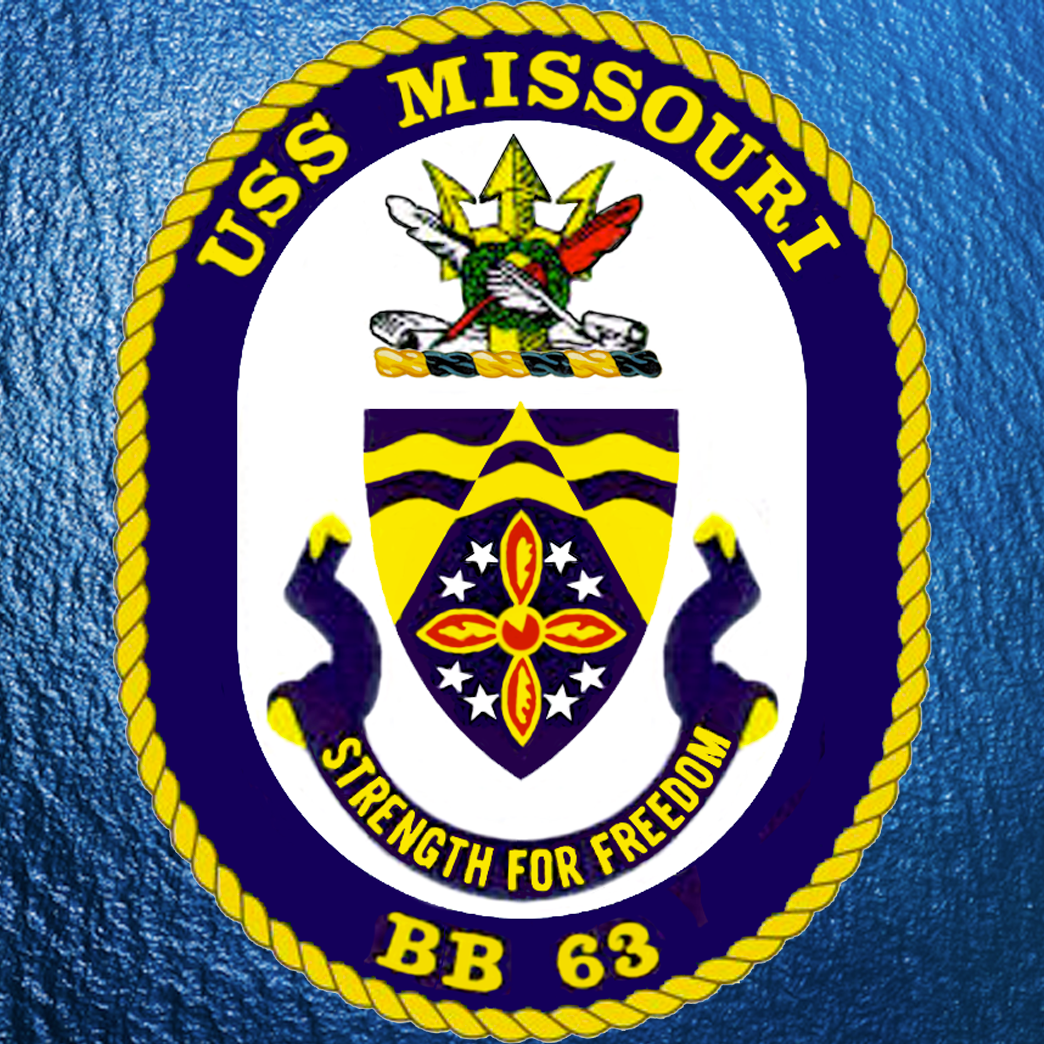
USS Missouri (BB-63) ("Mighty Mo" or "Big Mo") is an Iowa-class battleship and was the third ship of the United States Navy to be named after the U.S. state of Missouri. Missouri was the last battleship commissioned by the United States and is best remembered as the site of the surrender of the Empire of Japan, which ended World War II.
Missouri was ordered in 1940 and commissioned in June 1944. In the Pacific Theater of World War II she fought in the battles of Iwo Jima and Okinawa and shelled the Japanese home islands, and she fought in the Korean War from 1950 to 1953. She was decommissioned in 1955 into the United States Navy reserve fleets (the "Mothball Fleet"), but reactivated and modernized in 1984 as part of the 600-ship Navy plan, and provided fire support during Operation Desert Storm in January/February 1991.
Missouri received a total of 11 battle stars for service in World War II, Korea, and the Persian Gulf, and was finally decommissioned on 31 March 1992 after serving a total of 17 years of active service, but remained on the Naval Vessel Register until her name was struck in January 1995. In 1998, she was donated to the USS Missouri Memorial Association and became a museum ship at Pearl Harbor.
| Namesake: | State of Missouri |
| Ordered: | 12 June 1940 |
| Builder: | Brooklyn Navy Yard |
| Laid down: | 6 January 1941 |
| Launched: | 29 January 1944 |
| Sponsored by: | Mary Margaret Truman |
| Commissioned: | 11 June 1944 |
| Decommissioned: | 26 February 1955 |
| Recommissioned: | 10 May 1986 |
| Decommissioned: | 31 March 1992 |
| Struck: | 12 January 1995 |
| Identification: | Hull symbol: BB-63 |
| Motto: | "Strength for Freedom" |
| Nickname(s): | "Mighty Mo" or "Big Mo" |
| Honors and awards: |
11 battle stars |
| Status: | Museum ship in Pearl Harbor |
| Notes: | Final battleship to be completed by the United States |
USS Missouri (BB-63) Jr. Pen Blank Set Ship’s Seal Cap + Authentic Teak Deck Wood
Turn a piece of living naval history. This Junior-size pen blank set pairs a precision-cast resin cap featuring the official seal of the USS Missouri (BB-63) with a solid lower blank cut from original teak decking recovered from the “Mighty Mo.”
What’s Included
- Cap blank: High-quality resin casting of the USS Missouri ship’s seal
- Lower blank: Solid teak from the actual deck of BB-63
- Sized for Junior (Jr.) pen kits
Each set includes a Certificate of Authenticity documenting the provenance of the teak.
For guidance on tube sizes and compatible pen kits, see our detailed reference: Understanding Tube Sizes for Pen Kits at Stadium Pen Blanks
Historical Significance of the USS Missouri (BB-63)
The USS Missouri (BB-63) stands as one of the most storied vessels in United States naval history. The last battleship commissioned by the U.S. Navy, she was launched in January 1944 and commissioned on June 11, 1944. Built as an Iowa-class fast battleship, Missouri was designed for speed, firepower, and endurance. Her nine 16-inch guns could hurl 2,700-pound shells more than 20 miles, and her armored decks and hull made her a floating fortress.
Missouri earned her place in history during the final months of World War II in the Pacific. She supported the invasions of Iwo Jima and Okinawa, providing naval gunfire support and screening aircraft carriers against kamikaze attacks. On September 2, 1945, in Tokyo Bay, the “Mighty Mo” hosted one of the most consequential ceremonies of the 20th century. Japanese representatives boarded the ship and signed the Instrument of Surrender on her teak main deck, formally ending World War II. General Douglas MacArthur accepted the surrender on behalf of the Allied powers while the flags of the United States, United Kingdom, Soviet Union, and China flew above the quarterdeck. That teak deck became the stage upon which the bloodiest conflict in human history concluded.
After the war, Missouri continued to serve. She was decommissioned in 1955, then modernized and recommissioned in 1986 as part of President Reagan’s 600-ship Navy. During the Persian Gulf War in 1991, she fired Tomahawk cruise missiles and her 16-inch guns against Iraqi targets, becoming the only U.S. battleship to see combat in three major conflicts. Decommissioned for the final time in 1992, she now rests as a museum ship at Pearl Harbor, Hawaii, permanently moored near the USS Arizona Memorial—a powerful symbol of both the beginning and the end of America’s involvement in World War II.
The teak wood used in this pen blank set comes from the ship’s actual deck planking. Teak was chosen for battleship decks because of its exceptional durability, resistance to rot and insects, and ability to provide insulation against the tropical sun. Over decades of service and subsequent restoration work, original teak has been carefully removed and preserved. Each piece carries the physical memory of the sailors who walked those decks, the ceremonies held upon them, and the weight of history that unfolded there.
This Junior set pairs a resin-cast representation of the ship’s official seal with a solid lower blank of that authentic teak. The seal itself reflects the proud heraldry of BB-63, while the wood provides a direct, tangible connection to the vessel.
Owning and turning material from the USS Missouri is more than a craft project—it is a way to keep a piece of American naval heritage alive in a form that can be held, used, and passed on.


US Navy Ship Wood and Revere Copper Company nail embedded object blanks
-
27/64" blanks are for Sierra Clones
-
3/8" blanks for PSI Nautical kit
-
JR Set 12.5mm embedded cap and wood lower blank short 2" x 5/8"sq
All blanks will come with one COA per blank. COAs are 4" x 6" card stock with silver foil embossed COA seal.
NOTE: The JR lower wood is very stable and hard wood but the blanks have some cracks that need to be filled. Cracks can be filled with CA or Epoxy and wood shavings or contrasting complimentary materials.
USS New Hampshire (1864) was a 2,633-ton ship originally designed to be the 74-gun ship of the line Alabama. She remained on the stocks for nearly 40 years before being renamed and launched as a storeship and depot ship during the American Civil War. New Hampshire was renamed Granite State on 30 November 1904 to free the name "New Hampshire" for a newly authorized battleship New Hampshire (BB-25).
As Alabama, she was one of "nine ships to rate not less than 74 guns each" authorized by Congress on 29 April 1816, and was laid down by the Portsmouth Navy Yard, ME, in June 1819, the year the State of Alabama was admitted to the Union. Though ready for launch by 1825, she remained on the stocks for preservation to avoid the expense of manning and maintaining a ship of the line. She was renamed New Hampshire on 28 October 1863 and launched on 23 April 1864. She was fitted out as a storeship and depot ship of the South Atlantic Blockading Squadron, and commissioned on 13 May 1864, Commodore Henry K. Thatcher in command. From July 1864 through the end of the Civil War she served as store and depot ship at Port Royal, SC.
The New Hampshire was built of live oak with copper fasteners. Revere Copper Company, the firm started by Paul Revere in Canton, MA, was awarded a contract to supply the United States Navy with copper spikes, sheeting, and deck nails in 1816. The deck nail pictured here was recovered from the New Hampshire.
Granite State served the New York State Militia until she caught fire and sank at her pier in the Hudson River on 23 May 1921. Sold for salvage July 1922, the towline parted during a storm and she again caught fire and sank off Half Way Rock near Manchester-by-the-Sea, MA. The shipwreck is in 30 ft of water and is an easy scuba dive. Although the hull is mostly buried in the sand, small artifacts and copper spikes may still be found. The site was added to the National Register of Historic Places on 29 October 1976.
|
History |
|
|---|---|
|
United States |
|
| Laid down: | June 1819 |
| Launched: | 23 April 1864 at the Portsmouth Naval Shipyard |
| Commissioned: | 13 May 1864 |
| Out of service: | 23 May 1921 |
| Stricken: | 1921 (est.) |
| Fate: |
|
|
General characteristics |
|
| Tonnage: | 2633 |
| Length: | 203.7 ft (62.1 m) |
| Beam: | 51.3 ft (15.6 m) |
| Draft: | 21 ft 6 in (6.55 m) |
| Propulsion: | Sail |
| Speed: | Unknown |
| Complement: | 820 officers and men |
| Armament: |
|


US Navy Ship Wood
Blanks are 3/4" x 3/4"
5â" x 3/4" Long blanks are $20 each
2.5â" x 3/4" Short blanks are $11 each
5â" x 1-1/2â" Call blanks are $80 each
2.5â" x 1-1/2â" Stopper blanks are $40 each
Extra COAs are $3 each
Wooden Wave Blanks are pre-tubed blanks with a label cast of the ship's seal and wood from the ship. These blanks are designed to work with Sierra Clone or Bolt Action pen kits. Sierra Clone tubes are 2-1/4" x 27/64" and Bolt Action Tubes are 1-31/32”.
All blanks will come with one COA per blank. COAs are 4" x 6" card stock with foil embossed COA seal.
All blanks are cut as they are ordered.
--
USS New Jersey (BB-62) ("Big J" or "Black Dragon") is an Iowa-class battleship, and was the second ship of the United States Navy to be named after the US state of New Jersey. New Jersey earned more battle stars for combat actions than the other four completed Iowa-class battleships, and was the only US battleship providing gunfire support during the Vietnam War.
During World War II, New Jersey shelled targets on Guam and Okinawa, and screened aircraft carriers conducting raids in the Marshall Islands. During the Korean War, she was involved in raids up and down the North Korean coast, after which she was decommissioned into the United States Navy reserve fleets, better known as the "mothball fleet". She was briefly reactivated in 1968 and sent to Vietnam to support US troops before returning to the mothball fleet in 1969. Reactivated once more in the 1980s as part of the 600-ship Navy program, New Jersey was modernized to carry missiles and recommissioned for service. In 1983, she participated in US operations during the Lebanese Civil War.
New Jersey was decommissioned for the last time in 1991 (after serving a total of 21 years in the active fleet), having earned a Navy Unit Commendation for service in Vietnam and 19 battle and campaign stars for combat operations during World War II, the Korean War, the Vietnam War, the Lebanese Civil War, and service in the Persian Gulf. After a brief retention in the mothball fleet, she was donated to the Home Port Alliance in Camden, New Jersey, and began her career as a museum ship 15 October 2001.
| Namesake: | State of New Jersey |
| Ordered: | 1 July 1939 |
| Builder: | Philadelphia Naval Shipyard |
| Laid down: | 16 September 1940 |
| Launched: | 7 December 1942 |
| Sponsored by: | Carolyn Edison |
| Commissioned: | 23 May 1943 |
| Decommissioned: | 30 June 1948 |
| Recommissioned: | 21 November 1950 |
| Decommissioned: | 21 August 1957 |
| Recommissioned: | 6 April 1968 |
| Decommissioned: | 17 December 1969 |
| Recommissioned: | 28 December 1982 |
| Decommissioned: | 8 February 1991 |
| Struck: | 4 January 1999 |
| Motto: | "Firepower for Freedom" |
| Nickname(s): | "Big J" "Black Dragon" |
| Honors and awards: |
19 battle stars |
| Status: | Museum ship in Camden, New Jersey |
| Notes: | Most decorated battleship in the US Navy's history |
USS New Jersey (BB-62) Jr. Pen Blank Set
Ship’s Seal Cap + Authentic Teak Deck Wood
Turn a piece of living naval history with this Junior-size pen blank set. It pairs a precision-cast resin cap featuring the official seal of the USS New Jersey (BB-62) with a solid lower blank cut from original teak decking recovered from the most decorated battleship in U.S. Navy history. Each set includes a Certificate of Authenticity documenting the provenance of the teak.
What's Included
- Cap blank: High-quality resin casting of the USS New Jersey ship’s seal
- Lower blank: Solid teak from the actual deck of BB-62
- Sized for Junior (Jr.) pen kits
For guidance on tube sizes and compatible pen kits, see our detailed reference: Understanding Tube Sizes for Pen Kits at Stadium Pen Blanks.
Historical Significance
The USS New Jersey (BB-62) is widely regarded as the most decorated battleship in the history of the United States Navy. An Iowa-class fast battleship, she was commissioned on May 23, 1943, and earned a reputation for reliability, firepower, and combat endurance that spanned five decades and four major conflicts. During World War II, New Jersey operated extensively in the Pacific, screening fast carrier task forces and participating in the Battle of the Philippine Sea. After the war she was recommissioned for the Korean War in 1950, providing heavy naval gunfire support. In 1967 the Navy recalled New Jersey for service in Vietnam—the only battleship reactivated for that conflict—where she fired more than 5,000 rounds of 16-inch ammunition. Modernized and recommissioned once more in 1982, New Jersey returned with updated electronics, Tomahawk cruise missiles, and Harpoon anti-ship missiles. Decommissioned for the final time in 1991, she is now a museum ship in Camden, New Jersey.
Material Specs & Compatibility
The teak lower blank measures approximately 3/4" x 3/4" x 5" and is solid, kiln-dried deck wood ready for turning. The resin cap blank is cast to fit standard Jr. pen kits. Both components turn cleanly with standard carbide tools and accept CA glue, epoxy, or friction finishes. Compatible with most Jr. pen kits from manufacturers such as PSI and Berea. Avoid aggressive sanding on the resin cap to preserve fine seal details.
Suggested Uses
Ideal for military history themed pens, veteran gifts, or commemorative desk sets. Pair with other Historical Materials blanks for matching letter openers or bottle stoppers. The combination of authentic teak and resin seal creates a striking contrast that highlights both the wood grain and the detailed casting.
Care & Safety
Store blanks in a cool, dry place. Wear appropriate PPE when turning and finishing. The teak may contain natural oils; test finishes on scrap before final application.


US Navy Ship Wood
Blanks are 3/4" x 3/4"
Wooden Wave Blanks are pre-tubed blanks with a label cast of the ship's seal and wood from the ship. These blanks are designed to work with Sierra Clone or Bolt Action pen kits. Sierra Clone tubes are 2-1/4" x 27/64" and Bolt Action Tubes are 1-31/32”.
All blanks will come with one COA per blank. COAs are 4" x 6" card stock with silver foil embossed COA seal.
All blanks are cut as they are ordered.
------------------------------------------------------------
USS North Carolina (BB-55) is the lead ship of the North Carolina class of fast battleships, the first vessel of the type built for the United States Navy. Built under the Washington Treaty system, North Carolina's design was limited in displacement and armament, though the United States used a clause in the Second London Naval Treaty to increase the main battery from the original armament of nine 14-inch (360 mm) guns to nine 16 in (410 mm) guns. The ship was laid down in 1937 and completed in April 1941, while the United States was still neutral during World War II. During this period, she operated off the eastern coast of the United States.
Following the Japanese attack on Pearl Harbor in December, North Carolina mobilized for war and was initially sent to Iceland to counter a possible sortie by the German battleship Tirpitz, though this did not materialize and North Carolina was promptly transferred to the Pacific to strengthen Allied forces during the Guadalcanal campaign. There, she screened aircraft carriers engaged in the campaign and took part in the Battle of the Eastern Solomons on 24-25 August, where she shot down several Japanese aircraft. The next month, she was torpedoed by a Japanese submarine but was not seriously damaged. After repairs, she returned to the campaign and continued to screen carriers during the campaigns across the central Pacific in 1943 and 1944, including the Gilberts and Marshall Islands and the Mariana and Palau Islands, where she saw action during the Battle of the Philippine Sea.
The ship was undergoing a refit during the invasion of the Philippines but took part in the later stages of the Philippines campaign and was present when the fleet was damaged by Typhoon Cobra. She took part in offensive operations in support of the Battles of Iwo Jima and Okinawa in 1945, including numerous attacks on Japan. Following the surrender of Japan in August, she carried American personnel home during Operation Magic Carpet. North Carolina operated briefly off the east coast of the United States in 1946 before being decommissioned the next year and placed in reserve. Stricken from the Naval Vessel Register in 1960, the ship was saved from the breaker's yard by a campaign to preserve the vessel as a museum ship in her namesake state. In 1962, the North Carolina museum was opened in Wilmington, North Carolina.
| History | |
|---|---|
|
|
|
| Name: | North Carolina |
| Namesake: | State of North Carolina |
| Ordered: | 1 August 1937 |
| Builder: | New York Naval Shipyard |
| Laid down: | 27 October 1937 |
| Launched: | 13 June 1940 |
| Commissioned: | 9 April 1941 |
| Decommissioned: | 27 June 1947 |
| Struck: | 1 June 1960 |
| Nickname(s): | "Showboat" |
| Status: | Museum ship since 29 April 1962 in Wilmington, North Carolina |
| General characteristics | |
| Class and type: | North Carolina-class battleship |
| Displacement: |
|
| Length: | 728 ft 9 in (222.12 m) |
| Beam: | 108 ft 4 in (33.02 m) |
| Draft: | 32 ft 11.5 in (10.046 m) |
| Installed power: |
|
| Propulsion: |
|
| Speed: | 28 knots (52 km/h; 32 mph) |
| Range: | 17,450 nmi (32,320 km; 20,080 mi) at 15 knots (28 km/h; 17 mph) |
| Complement: | 1,800 |
| Armament: |
|
| Armor: |
|
| Aircraft carried: | 3 × Vought OS2U Kingfisher floatplanes |
| Aviation facilities: | 2 × trainable catapults on her fantail |
USS North Carolina (BB-55) Jr. Pen Blank Set
Turn a piece of living naval history with this Junior-size pen blank set. It pairs a precision-cast resin cap featuring the official seal of the USS North Carolina (BB-55) with a solid lower blank cut from original teak decking recovered from the battleship. Each set includes a Certificate of Authenticity documenting the provenance of the teak.
What's Included
- Cap blank: High-quality resin casting of the USS North Carolina ship’s seal
- Lower blank: Solid teak from the actual deck of BB-55
- Sized for Junior (Jr.) pen kits
For guidance on tube sizes and compatible pen kits, see our detailed reference: Understanding Tube Sizes for Pen Kits at Stadium Pen Blanks
Material Provenance & Turning Vision
The teak wood in this set comes from the ship’s actual deck planking. Teak was selected for battleship decks due to its exceptional durability, resistance to rot, and ability to insulate against tropical conditions. Each piece carries the physical memory of the sailors who served aboard. Turn this material into a meaningful heirloom pen that honors naval service. Suggested projects include elegant desk pens, matching letter openers, or small keepsake boxes. Pen blanks | Pen display stands & COA holders | Magic Juice Polishing Compound | Compatible Pen Component Sets | US Navy ship wood | Military relics
USS North Carolina (BB-55) Service History
The USS North Carolina (BB-55) was the lead ship of her class and the first new battleship built for the U.S. Navy after the Washington Naval Treaty era. Laid down in 1937 and commissioned in April 1941, she displaced 44,800 tons at full load and carried nine 16-inch guns in three triple turrets. Her design balanced speed, armor, and firepower, achieving 28 knots while providing substantial protection for her crew of over 2,300.
During World War II she earned 15 battle stars, more than any other U.S. battleship. She screened aircraft carriers in the Guadalcanal campaign, provided gunfire support at Tarawa, Kwajalein, and Saipan, and helped neutralize Japanese airfields and shore batteries across the Pacific. In 1942 she took a torpedo hit from a Japanese submarine yet remained operational, demonstrating the resilience of her construction. After the war she was decommissioned in 1947 and placed in reserve. In 1961 she was donated to the state of North Carolina and opened as a museum ship in Wilmington, where she remains today as a National Historic Landmark and popular educational site.
Enthusiasts value North Carolina teak because it directly connects the finished pen to one of the most decorated battleships of the Pacific Theater. The wood witnessed major amphibious landings and carrier task force operations that shaped the outcome of the war. Turning this material preserves a tangible link to that legacy while creating a functional piece of history.


|
Sierra Clone (27/64") Embedded |
|
These single blank tubes are a custom label cast image of the USS Princeton. The ends of the blank sections are a short piece of wood salvaged from the Princeton.
|
USS Princeton (CV/CVA/CVS-37, LPH-5) was one of 24 Essex-class aircraft carriers built during and shortly after World War II for the United States Navy. The ship was the fifth US Navy ship to bear the name, and was named for the Revolutionary War Battle of Princeton. Princeton was commissioned in November 1945, too late to serve in World War II, but saw extensive service in the Korean War, in which she earned eight battle stars, and the Vietnam War. She was reclassified in the early 1950s as an attack carrier (CVA), then as an Antisubmarine Aircraft Carrier (CVS), and finally as an amphibious assault ship (LPH), carrying helicopters and marines. One of her last missions was to serve as the prime recovery ship for the Apollo 10 space mission.
Although she was extensively modified internally as part of her conversion to an LPH, external modifications were minor, so throughout her career Princeton retained the classic appearance of a World War II Essex-class ship. She was decommissioned in 1970, and sold for scrap in 1971.
|
USS Princeton (CV-37) |
|||
|
Laid Down: |
|
Class: |
|
| Launched: |
Tonnage: |
||
| Commissioned: |
|
Length: | |
|
Fate: |
Beam: | ||
| Crew: | Draft: | |
|

US Navy Ship Wood
Blanks are 3/4" x 3/4"
Wooden Wave Blanks are pre-tubed blanks with a label cast of the ship's seal and wood from the ship. These blanks are designed to work with Sierra Clone or Bolt Action pen kits. Sierra Clone tubes are 2-1/4" x 27/64" and Bolt Action Tubes are 1-31/32”.
All blanks are cut as they are ordered.
------------------------------------------------------------


_insignia,_in_1959.png)
Explore Our Signature Collections

Abrasive Polishing Compund
Magic Juice
Magic Juice (MJ) is an ideal polishing compound for solid resin materials and plastics. It can also be used to polish finishes like CA (Cyanoacrylate), CC (Craft Coat), or similar products. For hybrid or "worthless" wood blanks, applying a sealing finish such as CA or Craft Coat before polishing with MJ will yield the best results.

Unique and highly collectible artifacts
Aircraft Relics
This collection of pen blanks is a tribute to aviation history, featuring aircraft relics spanning from the Wright Brothers' pioneering flights to the era of World War II and even the Space Shuttles, with many iconic planes in between. The collection includes both civilian and military aircraft, offering a unique connection to aviation's most remarkable achievements.

Revolutionary War to Present Day
Navy Ship Wood
Our solid wood and embedded hybrid blanks are crafted from the historic wood of U.S. Navy ships and submarines. This extraordinary collection spans vessels from the era of the USS Constitution to Iowa-class battleships and Los Angeles-class submarines, along with several other iconic ships in between.

Abrasive Polishing Compund
Player Relics
Our hybrid blanks combine game-used player relics with material from the iconic stadiums where their teams made history. Whether it's baseball, football, basketball, hockey, or even boxing, we offer a vast collection of player relic blanks. Each piece is a one-of-a-kind tribute to legendary athletes and the venues that defined their careers.

Bourbon and Scotch Barrel staves
Wine & Whiskey
Our extensive collection of barrel stave blanks is sourced from renowned wine vineyards, American bourbon barrels, and imported Scotch whisky casks. With staves from these barrels, each blank embodies the rich history and craftsmanship of these iconic spirits. Perfect for collectors and connoisseurs alike.
Recently Products Viewed


Important Legal Notice & Trademark Disclaimer
Stadium Pen Blanks products are intended for lawful personal and custom use only. Customers are solely responsible for ensuring their finished products comply with all applicable trademark laws.
We acknowledge that some pen turners pair our blanks with label-cast materials. However, we do NOT endorse, authorize, or support the application of any trademarked logos, team names, or branding owned by third parties, including professional and collegiate sports leagues and organizations such as MLB®, NFL®, NBA®, NHL®, NCAA®, MLS®, or any private businesses.
"Sierra™" is a registered trademark of Berea Hardwoods Co., Inc.