

![Sports Blanks [Wood]](http://stadiumpenblanks.com/cdn/shop/collections/Stadium-Wood.png?v=1727373383&width=3840)
![Sports Blanks [Plastic]](http://stadiumpenblanks.com/cdn/shop/collections/Plastic.png?v=1727373361&width=3840)
![Sports Blanks [All] - MLB](http://stadiumpenblanks.com/cdn/shop/collections/MLB.png?v=1727372677&width=3840)
![Sports Blanks [All] - NFL](http://stadiumpenblanks.com/cdn/shop/collections/NFL.png?v=1727372610&width=3840)

![Sports Blanks [All] - NBA](http://stadiumpenblanks.com/cdn/shop/collections/nba.png?v=1727372751&width=3840)
![Sports Blanks [All] - NHL](http://stadiumpenblanks.com/cdn/shop/collections/nhl.png?v=1727372784&width=3840)
![Sports Blanks [All] - NASCAR](http://stadiumpenblanks.com/cdn/shop/collections/NASCAR.png?v=1727372736&width=3840)
![Sports Blanks [All] - International Football Clubs](http://stadiumpenblanks.com/cdn/shop/collections/International.png?v=1727383899&width=3840)
![Sports Blanks [All] - MiLB](http://stadiumpenblanks.com/cdn/shop/collections/MiLB.png?v=1727372662&width=3840)
![Sports Blanks [All] - MLS](http://stadiumpenblanks.com/cdn/shop/collections/MLS.png?v=1727372725&width=3840)
![Sports Blanks [All] - Racing](http://stadiumpenblanks.com/cdn/shop/collections/horse.png?v=1727373032&width=3840)


![DinoBone 1 - Mold Body - 5.25" x 7/8" Pen Blanks [[SECONDS]] 40% Off](http://stadiumpenblanks.com/cdn/shop/files/DinoBone1-top-SECOND.png?v=1749599743&width=50)
![DinoBone 2 - Mold Body - 5.25" x 7/8" Pen Blanks [[SECONDS]] 40% Off](http://stadiumpenblanks.com/cdn/shop/files/DinoBone2-top-SECOND.png?v=1749599743&width=50)
![DinoBone 3 - Mold Body - 5.25" x 7/8" Pen Blanks [[SECONDS]] 40% Off](http://stadiumpenblanks.com/cdn/shop/files/DinoBone3-top-SECOND.png?v=1749599743&width=50)
![DogBone 1 - Mold Body - 5.5" x 3/4" Pen Blanks [[SECONDS]] 40% Off](http://stadiumpenblanks.com/cdn/shop/files/DogBone1-top-SECOND.png?v=1749609967&width=50)
![DogBone 2 - Mold Body - 5.5" x 3/4" Pen Blanks [[SECONDS]] 40% Off](http://stadiumpenblanks.com/cdn/shop/files/DogBone2-top-SECOND.png?v=1749609967&width=50)


180 products
Sort by:
180 products
180 products


USS Flint (AE-32/T-AE-32)
$20 - 1.5â" x 5ishâ" round blanks
$15 - 3/4" x 3/4" x 5â" regular blanks
(Some have a slightly rounded corner)
--
USS Flint (AE-32/T-AE-32) is a Kilauea-class ammunition ship of the United States Navy, and was named after the sparking rock flint (not, as is commonly thought, the city of Flint, Michigan). Flint was constructed at the Ingalls Nuclear Shipbuilding Division, Litton Industries, Inc., Pascagoula, Mississippi. The ship was delivered to the United States Navy at Charleston, South Carolina, on 30 August 1971.
| Name: | USS Flint |
| Awarded: | 8 March 1968 |
| Builder: | Ingalls Shipbuilding |
| Laid down: | 4 August 1969 |
| Launched: | 9 November 1970 |
| Acquired: | 30 August 1971 |
| Commissioned: | 20 November 1971 |
| Decommissioned: | 4 August 1995 |
| In service: | Transferred to Military Sealift Command 4 August 1995 |
| Identification: |
|
| Motto: |
|
| Status: | Stricken 8 November 2013 in NDRF |


US Navy Ship Wood
Blanks are 3/4" x 3/4"
Wooden Wave Blanks are pre-tubed blanks with a label cast of the ship's seal and wood from the ship. These blanks are designed to work with Sierra Clone or Bolt Action pen kits. Sierra Clone tubes are 2-1/4" x 27/64" and Bolt Action Tubes are 1-31/32”.
All blanks are cut as they are ordered.
------------------------------------------------------------
USS Iowa (BB-61) is a retired battleship, the lead ship of its class, and the fourth in the United States Navy to be named after the state of Iowa. Owing to the cancellation of the Montana-class battleships, Iowa is the last lead ship of any class of United States battleships and was the only ship of its class to have served in the Atlantic Ocean during World War II.
During World War II, it carried President Franklin D. Roosevelt across the Atlantic to Mers El Kébir, Algeria, en route to a meeting of vital importance in 1943 in Tehran with Prime Minister Winston Churchill of Britain and Joseph Stalin, leader of the Soviet Union. When transferred to the Pacific Fleet in 1944, Iowa shelled beachheads at Kwajalein and Eniwetok in advance of Allied amphibious landings and screened aircraft carriers operating in the Marshall Islands. It also served as the Third Fleet flagship, flying Admiral William F. Halsey's flag at the Japanese surrender in Tokyo Bay. During the Korean War, Iowa was involved in raids on the North Korean coast, after which it was decommissioned into the United States Navy reserve fleets, better known as the "mothball fleet." It was reactivated in 1984 as part of the 600-ship Navy plan and operated in both the Atlantic and Pacific Fleets to counter the recently expanded Soviet Navy. In April 1989, an explosion of undetermined origin wrecked its No. 2 gun turret, killing 47 sailors.
Iowa was decommissioned for the last time in October 1990 after 19 total years of active service, and was initially stricken from the Naval Vessel Register (NVR) in 1995, before being reinstated from 1999 to 2006 to comply with federal laws that required retention and maintenance of two Iowa-class battleships. In 2011 Iowa was donated to the Los Angeles-based non-profit Pacific Battleship Center and was permanently moved to Berth 87 at the Port of Los Angeles in 2012, where it was opened to the public as the USS Iowa Museum.
| Namesake: | State of Iowa |
| Ordered: | 1 July 1939 |
| Builder: | New York Naval Yard |
| Laid down: | 27 June 1940 |
| Launched: | 27 August 1942 |
| Sponsored by: | Ilo Wallace |
| Commissioned: | 22 February 1943 |
| Decommissioned: | 24 March 1949 |
| Recommissioned: | 25 August 1951 |
| Decommissioned: | 24 February 1958 |
| Recommissioned: | 28 April 1984 |
| Decommissioned: | 26 October 1990 |
| Struck: | 17 March 2006 |
| Homeport: | Norfolk, Virginia (after 1980s refit) |
| Identification: | Hull symbol: BB-61 |
| Motto: | "Our Liberties We Prize, Our Rights We Will Maintain" |
| Nickname(s): |
|
| Honors and awards: |
11 battle stars |
| Fate: | Museum ship |
| Status: | On display at the Pacific Battleship Center at the Port of Los Angeles |

US Navy Ship Wood from the USS Lake Champlain (CV-39)
Solid wood Blanks are 3/4" x 3/4"
5" x 3/4" Long blanks
2.5" x 3/4" Short blanks
Extra COAs are $3 each
All blanks will come with one COA per blank. COAs are 4" x 6" card stock with foil embossed COA seal.
All blanks are cut as they are ordered.
------------------------------------------------------------

US Navy Ship Wood from the USS Lexington (CV-16)
Embedded wood blanks from the USS Lexington CV-16 are label cast images of the ship out to see with wood slices on the ends of the blanks. These blanks are available in Bolt Action and Sierra Clone blanks. Custom blanks are also available but will take up to two weeks for delivery.
All blanks will come with one COA per blank. COAs are 4" x 6" card stock with foil embossed COA seal.
All blanks are cut as they are ordered.
USS Lexington (CV/CVA/CVS/CVT/AVT-16), nicknamed "The Blue Ghost", is an Essex-class aircraft carrier built during World War II for the United States Navy. Originally intended to be named Cabot, the new aircraft carrier was renamed while under construction to commemorate the recently-lost USS Lexington (CV-2), becoming the sixth U.S. Navy ship to bear the name in honor of the Battle of Lexington.
Since 1992, the ship has been docked in Corpus Christi, Texas, where she operates as a museum.

US Navy Submarine Wood
Blanks are 3/4" x 3/4"
All blanks will come with one COA per blank. COAs are 4" x 6" card stock with silver foil embossed COA seal.
All blanks are cut as they are ordered.
------------------------------------------------------------
USS Ling (SS/AGSS/IXSS-297) is a Balao-class submarine of the United States Navy, named for the ling fish, also known as the cobia. USS Ling was laid down 2 Nov 1942 by the Cramp Shipbuilding Company of Philadelphia, PA. She was launched 15 Aug 1943 and commissioned on 8 Jun 1945, with Commander Molumphy in command. USS Ling headed out to sea to test her equipment 15 September 1945. The submarine was based at Naval Submarine Base New London in CT, until she sailed 11 Feb 1946 for the Panama Canal Zone, arriving eight days later. She operated out of Panama until 9 March when she sailed north. She completed inactivation 23 Oct at New London, decommissioned 26 Oct 1946, and entered the Atlantic Reserve Fleet.
In March 1960, Ling was towed to Brooklyn, NY, where she was converted into a training ship at the Brooklyn Navy Yard, simulating all aspects of submarine operations. She was reclassified an Auxiliary Submarine (AGSS-297) in 1962. Ling received one battle star for World War II service. Ling was reclassified a Miscellaneous Unclassified Submarine (IXSS-297), and struck from the Naval Register, 1 December 1971.
Six months later the old 297 was donated to the Submarine Memorial Association, a non-profit organization formed in 1972 with the purpose of saving Ling from the scrap yard. They petitioned the Navy to bring the boat to Hackensack, New Jersey to serve as a memorial museum. The sub is grounded in the Hackensack River at the former location of the defunct New Jersey Naval Museum in Hackensack, NJ. It is currently inaccessible to the public.

US Navy Ship Wood
Blanks are 3/4" x 3/4"
Wooden Wave Blanks are pre-tubed blanks with a label cast of the ship's seal and wood from the ship. These blanks are designed to work with Sierra Clone or Bolt Action pen kits. Sierra Clone tubes are 2-1/4" x 27/64" and Bolt Action Tubes are 1-31/32”.
All blanks are cut as they are ordered.
------------------------------------------------------------
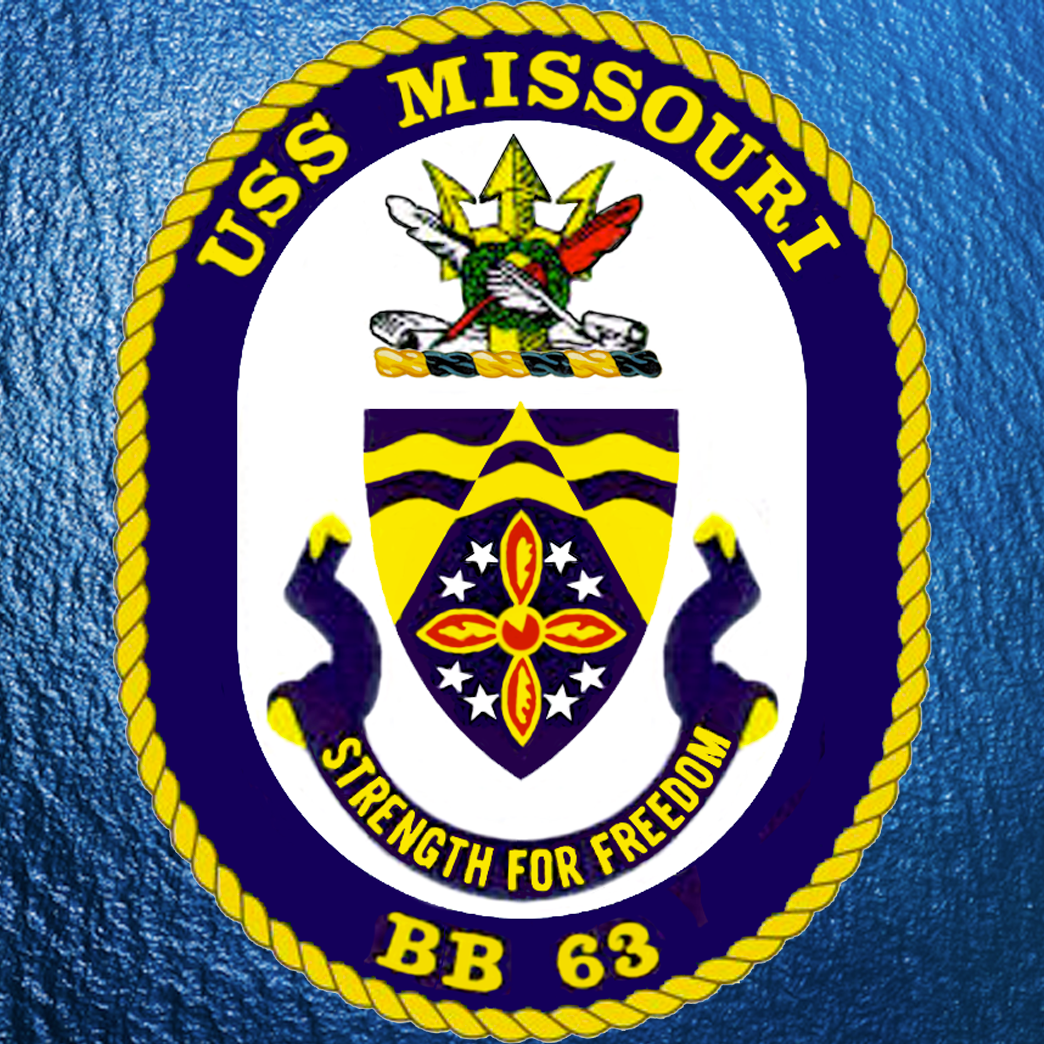
USS Missouri (BB-63) ("Mighty Mo" or "Big Mo") is an Iowa-class battleship and was the third ship of the United States Navy to be named after the U.S. state of Missouri. Missouri was the last battleship commissioned by the United States and is best remembered as the site of the surrender of the Empire of Japan, which ended World War II.
Missouri was ordered in 1940 and commissioned in June 1944. In the Pacific Theater of World War II she fought in the battles of Iwo Jima and Okinawa and shelled the Japanese home islands, and she fought in the Korean War from 1950 to 1953. She was decommissioned in 1955 into the United States Navy reserve fleets (the "Mothball Fleet"), but reactivated and modernized in 1984 as part of the 600-ship Navy plan, and provided fire support during Operation Desert Storm in January/February 1991.
Missouri received a total of 11 battle stars for service in World War II, Korea, and the Persian Gulf, and was finally decommissioned on 31 March 1992 after serving a total of 17 years of active service, but remained on the Naval Vessel Register until her name was struck in January 1995. In 1998, she was donated to the USS Missouri Memorial Association and became a museum ship at Pearl Harbor.
| Namesake: | State of Missouri |
| Ordered: | 12 June 1940 |
| Builder: | Brooklyn Navy Yard |
| Laid down: | 6 January 1941 |
| Launched: | 29 January 1944 |
| Sponsored by: | Mary Margaret Truman |
| Commissioned: | 11 June 1944 |
| Decommissioned: | 26 February 1955 |
| Recommissioned: | 10 May 1986 |
| Decommissioned: | 31 March 1992 |
| Struck: | 12 January 1995 |
| Identification: | Hull symbol: BB-63 |
| Motto: | "Strength for Freedom" |
| Nickname(s): | "Mighty Mo" or "Big Mo" |
| Honors and awards: |
11 battle stars |
| Status: | Museum ship in Pearl Harbor |
| Notes: | Final battleship to be completed by the United States |


US Navy Ship Wood
Blanks are 3/4" x 3/4"
5â" x 3/4" Long blanks are $20 each
2.5â" x 3/4" Short blanks are $11 each
5â" x 1-1/2â" Call blanks are $80 each
2.5â" x 1-1/2â" Stopper blanks are $40 each
Extra COAs are $3 each
Wooden Wave Blanks are pre-tubed blanks with a label cast of the ship's seal and wood from the ship. These blanks are designed to work with Sierra Clone or Bolt Action pen kits. Sierra Clone tubes are 2-1/4" x 27/64" and Bolt Action Tubes are 1-31/32”.
All blanks will come with one COA per blank. COAs are 4" x 6" card stock with foil embossed COA seal.
All blanks are cut as they are ordered.
--
USS New Jersey (BB-62) ("Big J" or "Black Dragon") is an Iowa-class battleship, and was the second ship of the United States Navy to be named after the US state of New Jersey. New Jersey earned more battle stars for combat actions than the other four completed Iowa-class battleships, and was the only US battleship providing gunfire support during the Vietnam War.
During World War II, New Jersey shelled targets on Guam and Okinawa, and screened aircraft carriers conducting raids in the Marshall Islands. During the Korean War, she was involved in raids up and down the North Korean coast, after which she was decommissioned into the United States Navy reserve fleets, better known as the "mothball fleet". She was briefly reactivated in 1968 and sent to Vietnam to support US troops before returning to the mothball fleet in 1969. Reactivated once more in the 1980s as part of the 600-ship Navy program, New Jersey was modernized to carry missiles and recommissioned for service. In 1983, she participated in US operations during the Lebanese Civil War.
New Jersey was decommissioned for the last time in 1991 (after serving a total of 21 years in the active fleet), having earned a Navy Unit Commendation for service in Vietnam and 19 battle and campaign stars for combat operations during World War II, the Korean War, the Vietnam War, the Lebanese Civil War, and service in the Persian Gulf. After a brief retention in the mothball fleet, she was donated to the Home Port Alliance in Camden, New Jersey, and began her career as a museum ship 15 October 2001.
| Namesake: | State of New Jersey |
| Ordered: | 1 July 1939 |
| Builder: | Philadelphia Naval Shipyard |
| Laid down: | 16 September 1940 |
| Launched: | 7 December 1942 |
| Sponsored by: | Carolyn Edison |
| Commissioned: | 23 May 1943 |
| Decommissioned: | 30 June 1948 |
| Recommissioned: | 21 November 1950 |
| Decommissioned: | 21 August 1957 |
| Recommissioned: | 6 April 1968 |
| Decommissioned: | 17 December 1969 |
| Recommissioned: | 28 December 1982 |
| Decommissioned: | 8 February 1991 |
| Struck: | 4 January 1999 |
| Motto: | "Firepower for Freedom" |
| Nickname(s): | "Big J" "Black Dragon" |
| Honors and awards: |
19 battle stars |
| Status: | Museum ship in Camden, New Jersey |
| Notes: | Most decorated battleship in the US Navy's history |

US Navy Ship Wood
Blanks are 3/4" x 3/4"
Wooden Wave Blanks are pre-tubed blanks with a label cast of the ship's seal and wood from the ship. These blanks are designed to work with Sierra Clone or Bolt Action pen kits. Sierra Clone tubes are 2-1/4" x 27/64" and Bolt Action Tubes are 1-31/32”.
All blanks are cut as they are ordered.
------------------------------------------------------------


US Navy Ship Wood
Pen Blanks are 3/4" x 3/4"
Call and Stopper blanks are 1-1/2" x 1-1/2"
Wooden Wave Blanks are pre-tubed blanks with a label cast of the ship's seal and wood from the ship. These blanks are designed to work with Sierra Clone or Bolt Action pen kits. Sierra Clone tubes are 2-1/4" x 27/64" and Bolt Action Tubes are 1-31/32”.
All blanks will come with one COA per blank. COAs are 4" x 6" card stock with silver foil embossed COA seal.
All blanks are cut as they are ordered.
------------------------------------------------------------
USS Wisconsin (BB-64) is an Iowa-class battleship, the second ship of the United States Navy to be named in honor of the U.S. state of Wisconsin. She was built at the Philadelphia Naval Shipyard in Philadelphia, Pennsylvania and launched on 7 December 1943 (the second anniversary of the Pearl Harbor raid), sponsored by the wife of Governor Walter Goodland of Wisconsin.
During her career, Wisconsin served in the Pacific Theater of World War II, where she shelled Japanese fortifications and screened United States aircraft carriers as they conducted air raids against enemy positions. During the Korean War, Wisconsin shelled North Korean targets in support of United Nations and South Korean ground operations, after which she was decommissioned. She was reactivated on 1 August 1986; after a modernization program, she participated in Operation Desert Storm in January and February 1991.
Wisconsin was last decommissioned in September 1991 after a total of 14 years of active service in the fleet, and having earned a total of six battle stars for service in World War II and Korea, as well as a Navy Unit Commendation for service during the January/February 1991 Gulf War. She currently functions as a museum ship operated by Nauticus, The National Maritime Center in Norfolk, Virginia. Wisconsin was stricken from the Naval Vessel Register (NVR) 17 March 2006, and was donated for permanent use as a museum ship. On 15 April 2010, the City of Norfolk officially took over ownership of the ship.
| Namesake: | The State of Wisconsin |
| Ordered: | 12 June 1940 |
| Builder: | Philadelphia Naval Shipyard |
| Laid down: | 25 January 1941 |
| Launched: | 7 December 1943 |
| Sponsored by: | Mrs. Goodland wife of Walter S. Goodland |
| Commissioned: | 16 April 1944 |
| Decommissioned: | 1 July 1948 |
| Recommissioned: | 3 March 1951 |
| Decommissioned: | 8 March 1958 |
| Recommissioned: | 22 October 1988 |
| Decommissioned: | 30 September 1991 |
| Struck: | 17 March 2006 |
| Motto: | Forward for Freedom |
| Nickname(s): | "Wisky" or "WisKy" |
| Honors and awards: |
6 Battle Stars |
| Status: | Museum ship at Nauticus |
| Notes: | Homeport Norfolk Virginia |


Blanks are chunks of the brown seats mixed with Temple University colored resin.
Pen Blanks are a minimum of 3/4" x 3/4"
Bottle Stopper and Ring blanks are 1-1/2" round
Full blocks are 6" x 5.25" and a minimum of 3/4" thick
Knife Scales are 1-3/8" x 5" x 3/8" minimum
All blanks will come with one COA per blank. COAs are 4" x 6" card stock with foil embossed COA seal. (Full Blocks come with 10 COAs.)
All blanks are cut as they are ordered.
Description coming soon

Basketball floor
Pen Blanks are a minimum of 3/4" x 3/4"
Bottle Stopper and Ring blanks are 1/2" x 1-1/4" square
Knife Scales are 1-3/8" x 5" x 3/8" minimum
All blanks will come with one COA per blank. COAs are 4" x 6" card stock with foil embossed COA seal.
All blanks are cut as they are ordered.
Walsh Gymnasium, located at Seton Hall University in South Orange, New Jersey, is a key facility for the university’s athletic programs. Opened in 1950, it serves as the home court for Seton Hall's men’s and women’s basketball teams. The gym is named after former university president, Monsignor William J. Walsh, and has been a staple in the university's sports culture for decades.
Walsh Gymnasium is not only a venue for athletic events but also serves as a community hub, hosting various events such as commencement ceremonies, concerts, and other university functions. With a seating capacity of around 2,500, it provides an intimate atmosphere for fans to enjoy basketball games and other events. Over the years, the gym has seen several renovations, enhancing its facilities and making it a more modern venue for students, athletes, and visitors alike.
Seton Hall University, founded in 1856, is a Catholic university that offers a wide range of academic programs, from undergraduate to graduate degrees. Its athletic teams, known as the Seton Hall Pirates, compete in NCAA Division I and are a prominent part of the school's identity. The university has a strong commitment to academics, community engagement, and fostering a sense of school pride, with Walsh Gymnasium being a central feature in that spirit.
![Wells Fargo Center [Basketball Floor] (Philadelphia 76ers)](http://stadiumpenblanks.com/cdn/shop/products/WellsFargoCenter_Philadelphia76ers.png?v=1584473982&width=1500)
Wooden floor pen blanks!
Blanks are 23/32" x 23/32"
All blanks will come with one COA per blank. COAs are 4" x 6" card stock with silver foil embossed COA seal.
All blanks are cut as they are ordered.
These blanks are from the center court basketball flooring of Wells Fargo Center.
------------------------------------------------------------
Hardin Penworks, LLC, certifies that material supplied to the artisan of the accompanying hand-crafted item was sourced from the iconic center court “76ers” logo of the Wells Fargo Center basketball court. The Wells Fargo Center is a multi-purpose arena located in Philadelphia, PA.
It serves as the home of the NBA Philadelphia 76ers and NHL Philadelphia Flyers. Originally called Spectrum II, it was completed in 1996 to replace the Spectrum as the new home arena of the Philadelphia 76ers and Philadelphia Flyers, on the former site of John F. Kennedy Stadium.
This wood was used as part of the center court from 1996 through the 2015 season.
This material is guaranteed to be 100% Authentic.

Wooden basketball court flooring pen blanks!
Pen Blanks are a close 3/4" x 3/4"
Ring blanks are 1-1/2" x 1-1/2"
All blanks will come with one COA per blank. COAs are 4" x 6" card stock with silver foil embossed COA seal.
All blanks are cut as they are ordered.
------------------------------------------------------------


Wooden basketball court flooring pen blanks!
Pen Blanks are approximately 3/4"sq
Ring blanks are approximately 1-1/2"sq x 3/4"
All blanks will come with one COA per blank. COAs are 4" x 6" card stock with silver foil embossed COA seal.
All blanks are cut as they are ordered.
Hardin Penworks, LLC, certifies that material supplied to the artisan of the accompanying hand-crafted item was sourced from the original wooden seats of Winston-Salem Memorial Coliseum.
Memorial Coliseum was a multi-purpose arena in Winston-Salem, NC. The arena, which opened in 1955, held 8,500 people and was eventually torn down and replaced by the Lawrence Joel Veterans Memorial Coliseum in 1989. It was home to the Wake Forest Demon Deacons men's basketball team from 1956 to 1989 and the Winston-Salem State Rams men's basketball team from 1960 to 1989.
The arena also hosted the Winston-Salem Polar Twins from 1973 to 1977 when they played in the Southern Hockey League and the Carolina/Winston-Salem Thunderbirds of the Atlantic Coast Hockey League from 1981 to 1991.


Wooden basketball court flooring pen blanks!
Pen Blanks are approximately 3/4"sq
Ring blanks are approximately 1-1/2"sq x 3/4"
All blanks will come with one COA per blank. COAs are 4" x 6" card stock with silver foil embossed COA seal.
All blanks are cut as they are ordered.
Hardin Penworks, LLC, certifies that material supplied to the artisan of the accompanying hand-crafted item was sourced from the original wooden seats of Winston-Salem Memorial Coliseum.
Memorial Coliseum was a multi-purpose arena in Winston-Salem, NC. The arena, which opened in 1955, held 8,500 people and was eventually torn down and replaced by the Lawrence Joel Veterans Memorial Coliseum in 1989. It was home to the Wake Forest Demon Deacons men's basketball team from 1956 to 1989 and the Winston-Salem State Rams men's basketball team from 1960 to 1989.
The arena also hosted the Winston-Salem Polar Twins from 1973 to 1977 when they played in the Southern Hockey League and the Carolina/Winston-Salem Thunderbirds of the Atlantic Coast Hockey League from 1981 to 1991.

Wooden seat pen blanks!
Pen Blanks are 3/4" x 3/4"
Ring Blanks are 1-1/2"
All blanks will come with one COA per blank. COAs are 4" x 6" card stock with silver foil embossed COA seal.
All blanks are cut as they are ordered.
------------------------------------------------------------
The Yale Bowl is a college football stadium in the northeast United States, located in New Haven, Connecticut, on the border of West Haven, about 1½ miles (2½ km) west of the main campus of Yale University. The home of the Yale Bulldogs of the Ivy League, it opened in 1914 with 70,896 seats; renovations have reduced its current capacity to 61,446.
The Yale Bowl inspired the design and naming of the Rose Bowl, from which is derived the name of college football's post-season games ("bowl games") and the NFL's "Super Bowl".
In 1973 and 1974, the stadium hosted the New York Giants of the National Football League, as Yankee Stadium was renovated into a baseball-only venue and Giants Stadium was still in the planning and construction stages; the team was able to move to Shea Stadium in 1975.

Yankee Stadium 1975 Plastic Seat Pen Blanks
Blanks are crafted from authentic blue plastic seats from Yankee Stadium mixed with complementary New York Yankees colored resin. Each blank includes one Hardin Collectibles Certificate of Authenticity.
Available Sizes:
Pen Blanks: Minimum 3/4" x 3/4" square
Bottle Stopper and Ring Blanks: 1-1/2" round
Blocks: 6" x 5" and a minimum of 7/8" thick
Knife Scale Pair: 2@ 5" x 1-1/2" x 3/8" minimum
All blanks include one Hardin Collectibles Certificate of Authenticity (COA) per blank—a 4" x 6" card stock with foil-embossed seal with serialized security tag, protected in a hard-shell plastic sleeve. Full Pen Blocks are provided with 10 COAs.
Most blanks are cut to order for freshness. Pen Blocks require a 2-3 week turnaround.
No finished pens are included. Pen components sold separately from our team-colored kits or your preferred vendors.
Turn Your Yankees Fandom into Custom Creations
Picture a sleek pen turned from these historic blue plastic fragments, accented by deep navy and white resin swirls that echo classic pinstripes. These blanks let you craft bottle stoppers or rings that celebrate legendary Bronx baseball moments, perfect for gifts or personal collections that stand out on any desk.
Explore more options in our Plastic sports blanks collection or pair your finished pieces with Pen display stands & COA holders and Magic Juice Polishing Compound. Compatible Pen Component Sets complete the project.
Yankee Stadium History
The Old Yankee Stadium: The House That Ruth Built
Yankee Stadium, the legendary "House That Ruth Built," stands as one of the most iconic venues in American sports history. Located in the Concourse section of the Bronx, New York City, the original stadium opened its doors on April 18, 1923, as the new home of Major League Baseball’s New York Yankees. Previously tenants of the New York Giants at the Polo Grounds, the Yankees’ owners, Jacob Ruppert and Tillinghast L’Hommedieu Huston, invested boldly in a state-of-the-art ballpark to capitalize on the surging popularity of their star slugger, Babe Ruth.
Construction began on May 5, 1922, on land purchased from the estate of William Waldorf Astor for around $675,000. Built by the White Construction Company at a cost of approximately $2.5 million (equivalent to roughly $36–39 million today), the stadium was completed in just 284 days. It featured a massive horseshoe-shaped design with triple-decked grandstands—the first true "stadium" in baseball rather than the wooden or steel-framed parks common at the time. Its innovative scale accommodated up to 58,000–60,000 fans—nearly double many contemporaries—reflecting confidence in Ruth’s drawing power.
On Opening Day, Ruth delivered a storybook moment, hitting the stadium’s first home run in a 4–1 victory over the Boston Red Sox. Sportswriter Fred Lieb of the New York Evening Telegram promptly dubbed it “The House That Ruth Built,” a nickname that endured for decades. The Yankees won the 1923 World Series in their inaugural season at the new park, launching a dynasty. Over its lifetime, the original Yankee Stadium hosted 6,581 regular-season Yankees games and 37 World Series contests, playing a central role in 26 of the franchise’s championships.
The stadium wasn’t just about baseball. It also served as home to the New York Giants NFL team from 1956 to 1973 and hosted major boxing matches, concerts, and other events. Its short right-field porch became legendary for Ruth and later power hitters like Mickey Mantle, Roger Maris, and Reggie Jackson. Monument Park, initially in center field and later relocated, honored the franchise’s greats and became a hallowed ground within the ballpark.
By the late 1960s and early 1970s, the aging facility showed its wear. A major renovation from late 1973 to April 1976 forced the Yankees to play at Shea Stadium (home of the Mets). The $160 million overhaul removed obstructing columns for better sightlines, added escalators, modernized concessions and restrooms, and updated the overall infrastructure, breathing new life into the venue for another three decades.
Despite the updates, structural concerns mounted in later years. A 1998 concrete collapse in the stands led to a game cancellation, highlighting ongoing maintenance challenges. The stadium closed after the 2008 season. Its final game on September 21, 2008, featured a memorable ceremony with legends and a 7–3 Yankees win over the Baltimore Orioles. Demolition began in 2009 and was completed in 2010. The site was transformed into Heritage Field, a public park preserving the spirit of the original location.
The old Yankee Stadium represented more than concrete and steel—it embodied the golden era of baseball, the rise of the Yankees as America’s team, and the cultural heartbeat of New York. Its legacy lives on in the new Yankee Stadium (opened 2009), which incorporated architectural tributes like the copper frieze and Monument Park. For generations of fans, “The House That Ruth Built” remains the Cathedral of Baseball, a symbol of excellence, history, and unforgettable moments.
![Yankee Stadium [Dugout Bench] (New York Yankees)](http://stadiumpenblanks.com/cdn/shop/files/YankeeStadium_DUGOUT_NewYorkYankees.png?v=1691251768&width=1500)
Original Dugout Bench removed in July 2009!
Only available in SHORT Pen Blanks at 2-1/2" x 3/4" square size. These blanks were cut from the original 2-12" squares sold as souvenir relics from the stadium.
All blanks will come with one COA per blank. COAs are 4" x 6" card stock with foil embossed COA seal.
Some blanks are cut as they are ordered.
Yankee Stadium was a stadium located in the Bronx, a borough of New York City. It was the home ballpark of the New York Yankees, one of the city's Major League Baseball (MLB) franchises, from 1923 to 1973 and then from 1976 to 2008. The stadium hosted 6,581 Yankees regular season home games during its 85-year history. It was also the former home of the New York Giants football team from 1956 through the first part of the 1973-74 football season. The stadium's nickname, "The House That Ruth Built", is derived from Babe Ruth, the baseball superstar whose prime years coincided with the stadium's opening and the beginning of the Yankees' winning history. It has also been known as "The Big Ballpark in The Bronx", "The Stadium", and "The Cathedral of Baseball".
The stadium was built from 1922 to 1923 for $2.4 million ($33.9 million in 2016 dollars). The stadium's construction was paid for entirely by Yankees owner Jacob Ruppert, who was eager to have his own stadium after sharing the Polo Grounds with the New York Giants baseball team the previous 10 years. Yankee Stadium opened for the 1923 MLB season and at the time, it was hailed as a one-of-a-kind facility in the country for its size. Over the course of its history, it became one of the most famous venues in the United States, having hosted a variety of events and historic moments during its existence. While many of these moments were baseball-related—including World Series games, no-hitters, perfect games and historic home runs—the stadium also hosted boxing matches, the 1958 NFL Championship Game, concerts, Jehovah's Witnesses conventions (see record attendance) and three Papal Masses. The stadium went through many alterations and playing surface configurations over the years. The condition of the facility worsened in the 1960s and 1970s, prompting its closing for renovation from 1974 to 1975. The renovation significantly altered the appearance of the venue and reduced the distance of the outfield fences.
In 2006, the Yankees began building a new $2.3 billion stadium in public parkland adjacent to the stadium. The price included $1.2 billion in public subsidies. The design includes a replica of the frieze along the roof that was in Yankee Stadium. Monument Park, a Hall of Fame for prominent former Yankees, was relocated to the new stadium. Yankee Stadium closed following the 2008 baseball season and the new stadium opened in 2009, adopting the "Yankee Stadium" moniker. The original Yankee Stadium was demolished in 2010, two years after it closed, and the 8-acre site was converted into a park called Heritage Field.
![Yankee Stadium [The House That Ruth Built] (New York Yankees)](http://stadiumpenblanks.com/cdn/shop/products/YankeeStadium_TheHouseThatRuthBuilt_NewYorkYankees.png?v=1620093451&width=1500)
![Yankee Stadium [The House That Ruth Built] (New York Yankees)](http://stadiumpenblanks.com/cdn/shop/products/YankeeStadium1946_NewYorkYankees.png?v=1620093451&width=1500)
Original 1923 Straight back and 1946 Curved back wooden seat pen blanks!
Pen Blanks are 3/4" x 3/4"
Knife Scales are 5" x 1-1/2" x 3/4"
Ring Blanks are 1-1/2" sq x 3/4"
All blanks will come with one COA per blank. COAs are 4" x 6" card stock with foil embossed COA seal.
Yankee 1926 and 1946 COAs are the exact same COA except for the seat pictured on the COA. The Giants COA features the Giants color theme and the 1946 seat.
Some blanks are cut as they are ordered.
No finished pens are included with any purchase. Pen components are purchased separately from your favorite vendors.
Yankee Stadium was a stadium located in the Bronx, a borough of New York City. It was the home ballpark of the New York Yankees, one of the city's Major League Baseball (MLB) franchises, from 1923 to 1973 and then from 1976 to 2008. The stadium hosted 6,581 Yankees regular season home games during its 85-year history. It was also the former home of the New York Giants football team from 1956 through the first part of the 1973-74 football season. The stadium's nickname, "The House That Ruth Built", is derived from Babe Ruth, the baseball superstar whose prime years coincided with the stadium's opening and the beginning of the Yankees' winning history. It has also been known as "The Big Ballpark in The Bronx", "The Stadium", and "The Cathedral of Baseball".
The stadium was built from 1922 to 1923 for $2.4 million ($33.9 million in 2016 dollars). The stadium's construction was paid for entirely by Yankees owner Jacob Ruppert, who was eager to have his own stadium after sharing the Polo Grounds with the New York Giants baseball team the previous 10 years. Yankee Stadium opened for the 1923 MLB season and at the time, it was hailed as a one-of-a-kind facility in the country for its size. Over the course of its history, it became one of the most famous venues in the United States, having hosted a variety of events and historic moments during its existence. While many of these moments were baseball-related—including World Series games, no-hitters, perfect games and historic home runs—the stadium also hosted boxing matches, the 1958 NFL Championship Game, concerts, Jehovah's Witnesses conventions (see record attendance) and three Papal Masses. The stadium went through many alterations and playing surface configurations over the years. The condition of the facility worsened in the 1960s and 1970s, prompting its closing for renovation from 1974 to 1975. The renovation significantly altered the appearance of the venue and reduced the distance of the outfield fences.
In 2006, the Yankees began building a new $2.3 billion stadium in public parkland adjacent to the stadium. The price included $1.2 billion in public subsidies. The design includes a replica of the frieze along the roof that was in Yankee Stadium. Monument Park, a Hall of Fame for prominent former Yankees, was relocated to the new stadium. Yankee Stadium closed following the 2008 baseball season and the new stadium opened in 2009, adopting the "Yankee Stadium" moniker. The original Yankee Stadium was demolished in 2010, two years after it closed, and the 8-acre site was converted into a park called Heritage Field.


Zebrawood Pen Blanks - Premium Exotic Wood
Wood Species & Blank Sizes
Blank Sizes: Each pen blank is a minimum of 5" long × 3/4" × 3/4" square.
Material: Genuine Zebrawood (Microberlinia brazzavillensis) — a striking exotic hardwood native to West Africa. All blanks are cut fresh to order.
Material Story
These premium pen blanks showcase the dramatic beauty of Zebrawood, prized by turners for its bold, zebra-like striped grain in contrasting light and dark brown tones. Native to the dense forests of West Africa, the wood offers excellent visual impact in finished pens while maintaining good workability for both standard and segmented projects. Each blank is selected for consistent color contrast and structural integrity, giving makers reliable stock that highlights natural figure without excessive waste.
Turning & Finishing Notes
Zebrawood turns cleanly with sharp tools and responds well to progressive sanding. Its interlocked grain can occasionally produce tear-out, so light cuts and sharp gouges are recommended. The wood accepts finishes beautifully. For enhanced protection and grain pop, apply Craft Coat after final sanding. It pairs nicely with most pen kits and adhesives for hybrid builds.
Project Ideas
Ideal for elegant everyday carry pens, desk sets, and bottle stoppers. Makers frequently use Zebrawood in segmented designs or pair it with darker woods for high-contrast patterns. It also suits ring blanks and small call blanks. Explore compatible options in our Compatible Pen Component Sets and showcase finished work on Pen display stands & COA holders.
Care & Safety
Store in a stable, dry environment to prevent movement. Always wear eye protection and a dust mask during turning. Work in a well-ventilated area and follow all tool safety guidelines.
Related Products
Browse more options in the Pen blanks collection or discover additional domestic and exotic varieties.


Explore Our Signature Collections

Abrasive Polishing Compund
Magic Juice
Magic Juice (MJ) is an ideal polishing compound for solid resin materials and plastics. It can also be used to polish finishes like CA (Cyanoacrylate), CC (Craft Coat), or similar products. For hybrid or "worthless" wood blanks, applying a sealing finish such as CA or Craft Coat before polishing with MJ will yield the best results.

Unique and highly collectible artifacts
Aircraft Relics
This collection of pen blanks is a tribute to aviation history, featuring aircraft relics spanning from the Wright Brothers' pioneering flights to the era of World War II and even the Space Shuttles, with many iconic planes in between. The collection includes both civilian and military aircraft, offering a unique connection to aviation's most remarkable achievements.

Revolutionary War to Present Day
Navy Ship Wood
Our solid wood and embedded hybrid blanks are crafted from the historic wood of U.S. Navy ships and submarines. This extraordinary collection spans vessels from the era of the USS Constitution to Iowa-class battleships and Los Angeles-class submarines, along with several other iconic ships in between.

Abrasive Polishing Compund
Player Relics
Our hybrid blanks combine game-used player relics with material from the iconic stadiums where their teams made history. Whether it's baseball, football, basketball, hockey, or even boxing, we offer a vast collection of player relic blanks. Each piece is a one-of-a-kind tribute to legendary athletes and the venues that defined their careers.

Bourbon and Scotch Barrel staves
Wine & Whiskey
Our extensive collection of barrel stave blanks is sourced from renowned wine vineyards, American bourbon barrels, and imported Scotch whisky casks. With staves from these barrels, each blank embodies the rich history and craftsmanship of these iconic spirits. Perfect for collectors and connoisseurs alike.
Recently Products Viewed


Important Legal Notice & Trademark Disclaimer
Stadium Pen Blanks products are intended for lawful personal and custom use only. Customers are solely responsible for ensuring their finished products comply with all applicable trademark laws.
We acknowledge that some pen turners pair our blanks with label-cast materials. However, we do NOT endorse, authorize, or support the application of any trademarked logos, team names, or branding owned by third parties, including professional and collegiate sports leagues and organizations such as MLB®, NFL®, NBA®, NHL®, NCAA®, MLS®, or any private businesses.
"Sierra™" is a registered trademark of Berea Hardwoods Co., Inc.